

Cai Be is a smaller city on the Mekong Delta and, in my opinion, one of the most underrated starting points for exploring the Mekong. There are very few tourists, and it’s interesting to see how life is in the Mekong.
We’ve been to Can Tho and a few other Mekong destinations, and this is probably still my favorite. So, here’s the ultimate Cai Be travel guide from Ho Chi Minh City. You can visit on a day trip, but I highly recommend spending 1-2 nights here so you aren’t in a rush and can fit in a few different activities.
How To Get To Cai Be Vietnam From HCMC
We traveled to Cai Be Vietnam by motorbike from D9 in HCMC and helped friends get there by bus. Driving is a lot faster, but either way is doable. Here’s a breakdown of how to travel there:
By motorbike
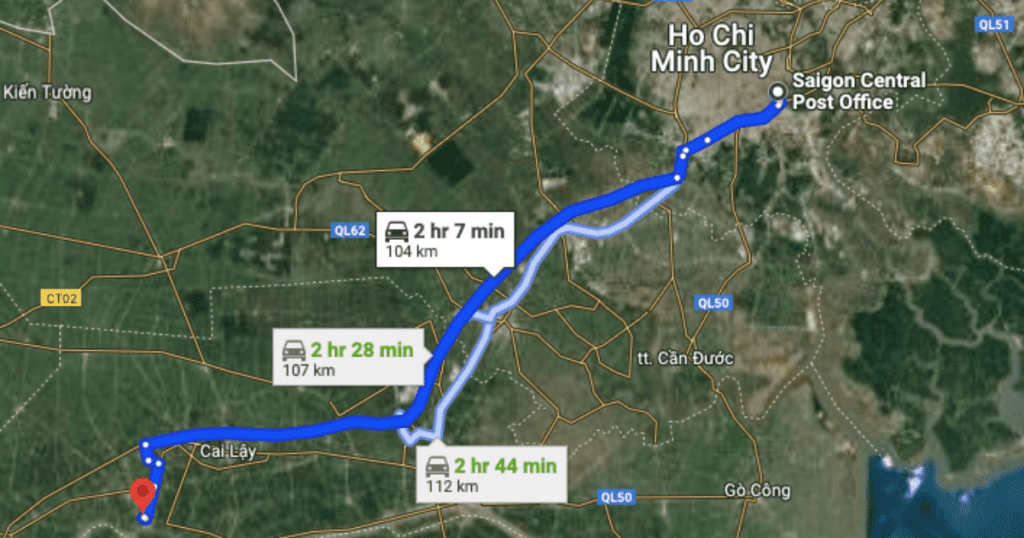
Location: Google Maps Link | Distance: 64 miles (103 km) | Travel Time from HCMC: 2.5 hours
Cai Be is approximately 2.5 hours southwest of Ho Chi Minh City. The route from Saigon is very easy, with minimal truck traffic and little traffic (once you get out of the city). Just plug in Cai Be village on Google Maps and follow along with the GPS. You’ll take CT101 most of the way there, and there are plenty of gas stations, coffee shops, and some local restaurants along the route.
The hardest part is driving in the city. If you aren’t 1000% comfortable driving in Saigon, you can always leave super early in the morning (think 5:00 AM or earlier) to avoid the worst traffic.
By bus
Bus Station: Mien Dong Bus Terminal | Travel Time by Bus: ~3 hours
Mien Dong Bus Terminal (East Bus Terminal) is one of the largest bus stations in Saigon. It’s about 30 minutes from the city center and has buses going everywhere (including to Cai Be).
When you get to the bus station, head to your preferred bus company (FUTA is one of the most popular ones) and ask about departures to Cai Be. Make sure they know exactly where you’re going, and show them Cai Be written down on your phone so there aren’t any translation problems. They’ll help you find the best bus. You might have to take a bus to Ben Tre if you’re coming from Cam Tho, but they’ll drop you off in Cai Be village.
From the bus station in Cai Be, you can either organize a pickup through your accommodation, take a taxi in Cai Be to your accommodation, or hop on a motorbike taxi. All options should be very affordable.
By private transfer
You can also splurge on private transportation to travel in style and comfort.
We usually coordinate private transportation through our accommodation, so you could either ask your hotel or hostel in Ho Chi Minh City if they offer transfer services or message your accommodation in Cai Be and ask them.
A private transfer is more expensive than driving or taking a bus and not that much faster, so it might not be the best way to get around Ho Chi Minh, but it’s definitely convenient.
Cai Be Vietnam Mekong Delta Brief History
Cai Be Vietnam Mekong Delta is possibly one of my favorite places in southern Vietnam, and there’s no question that visiting the Mekong is one of the best things to do in HCMC because of its unique history.
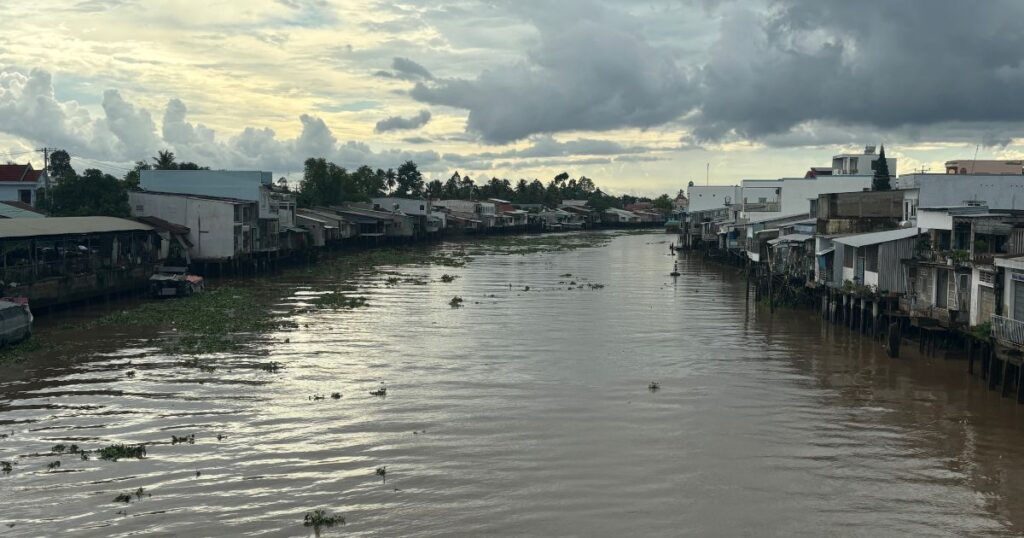
Cai Be was once the political and economic center of southern Vietnam due to its convenient location on the river. It was established as a strategic river port during the Nguyen Dynasty in the 18th century. It was home to one of the biggest floating markets on the river (unfortunately, it’s now closed). The French continued to help the village flourish because they recognized its strategic importance. They invested in several infrastructure projects, including the Cai Be Catholic Church.
While the city has lost some of its original charm with the emergence of new bridges and highways that make travel on the Mekong less important, it’s still a hub for agriculture, traditional crafts, and some tourism.
What To Do In Cai Be Village
First, everyone always talks about visiting the Cai Be floating market. Unfortunately, the Cai Be floating market is no longer open. It has become obsolete because trade via the river isn’t a thing. That said, there are still a lot of other great activities.

Mekong River Tour
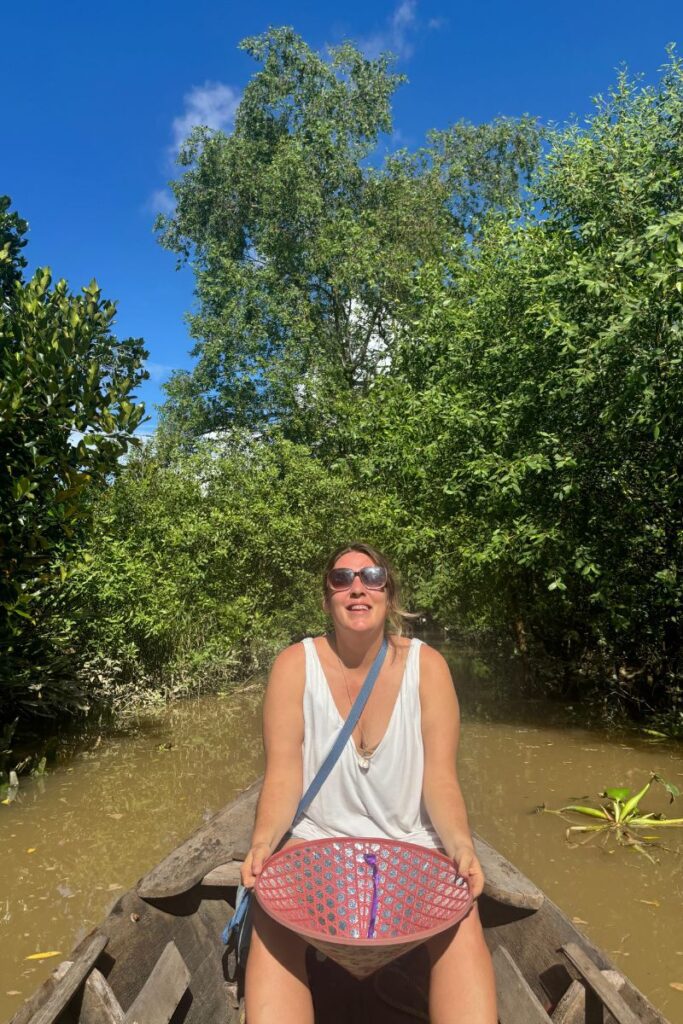
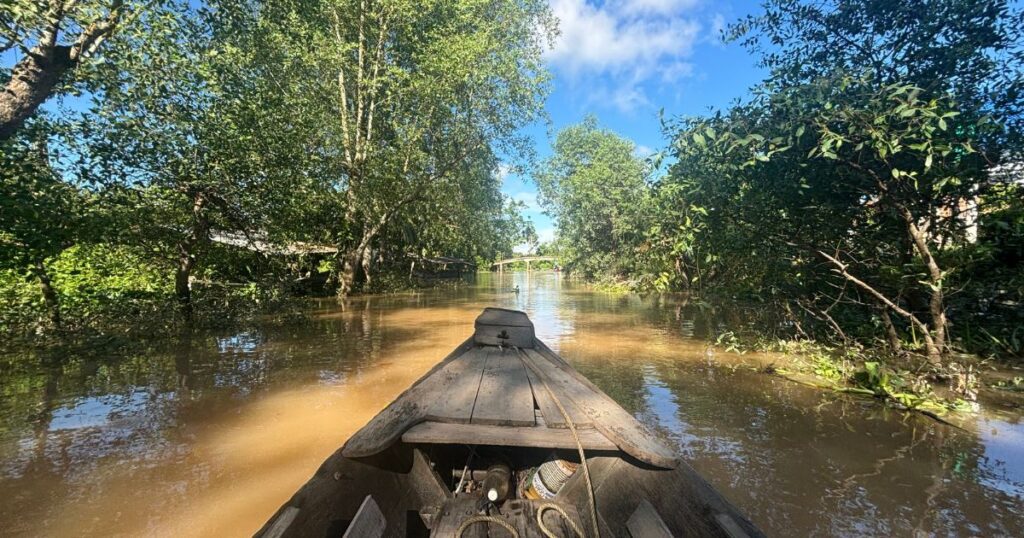
The best thing to do in Cai Be is to take a half-day Mekong River tour. This activity usually includes the most popular activities, and you’ll get to spend a lot of time on the river and learn more about the history and culture.
We took a Mekong River tour through our accommodation, Mekong Lodge Resort, and loved it.
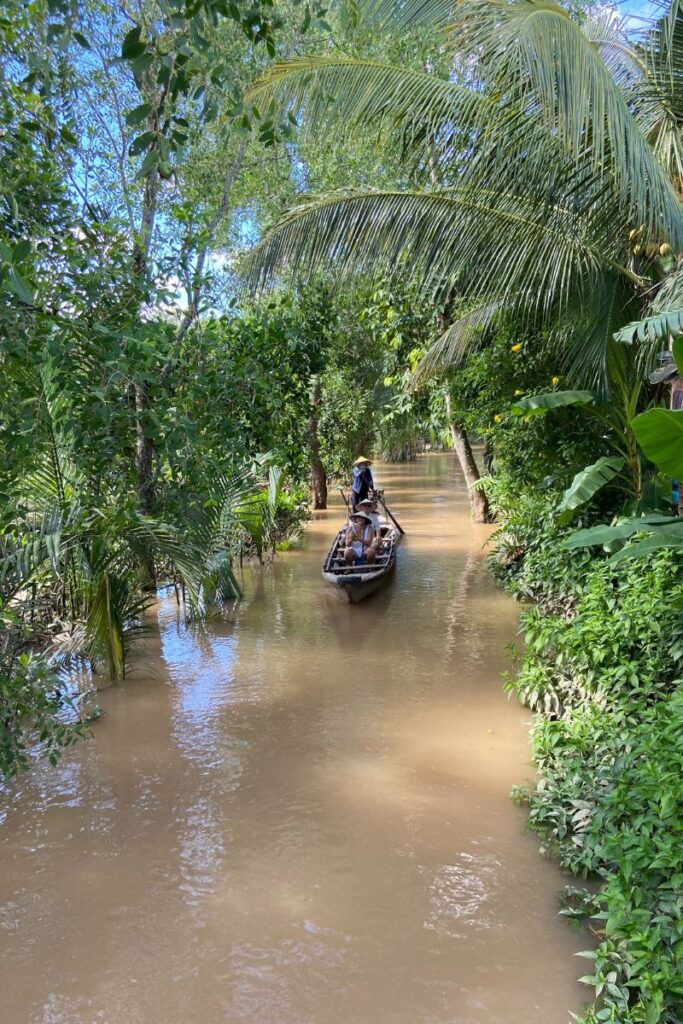
The boat tour included about a 45-minute ride through smaller canals on the river, a walk through a local market with the guide, a stop at a local bee farm where you can try fresh honey and hold a bee hive, a stop in a local village where you’ll learn about homemade local products, and a short cultural show including traditional Vietnamese song and dance.
Many of the above activities are mentioned throughout this article, so it’s the perfect way to see most of Cai Be and this part of the Mekong.
Ride bikes around the town
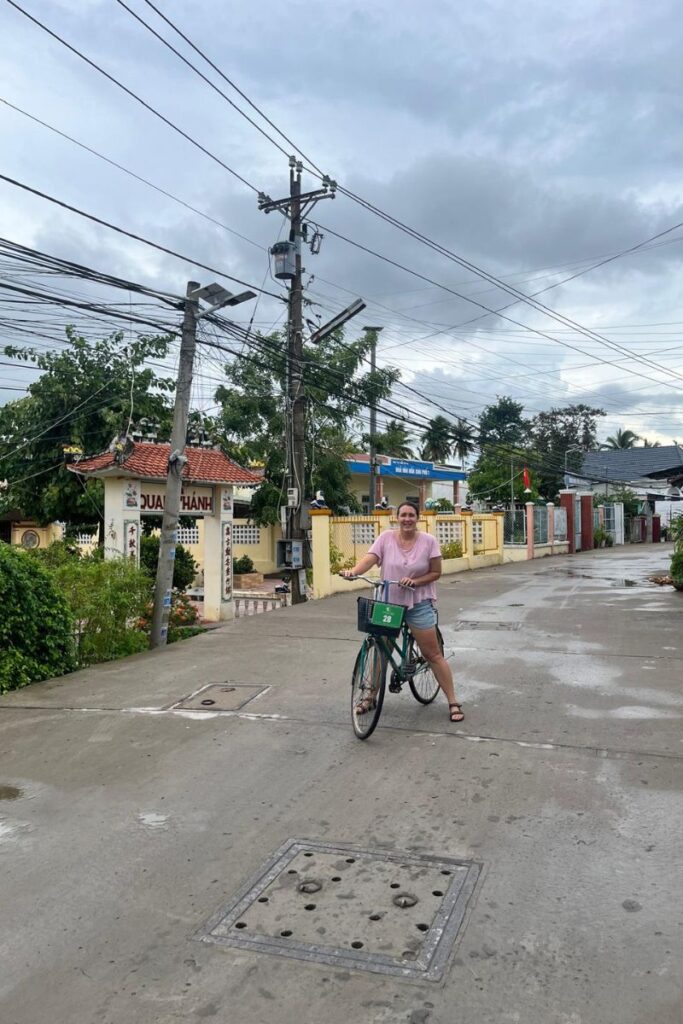
When we got to Cai Be, the first thing we did was grab a bicycle from our hotel and explore the village. There are many interesting backroads paralleling the water, some cool local markets, friendly people waving at you as you pass, and other fun things to see. You could honestly spend an entire day exploring on a bicycle, so I recommend setting aside at least a few hours.
Visit the Cai Be market
Cai Be Market: Google Maps Location
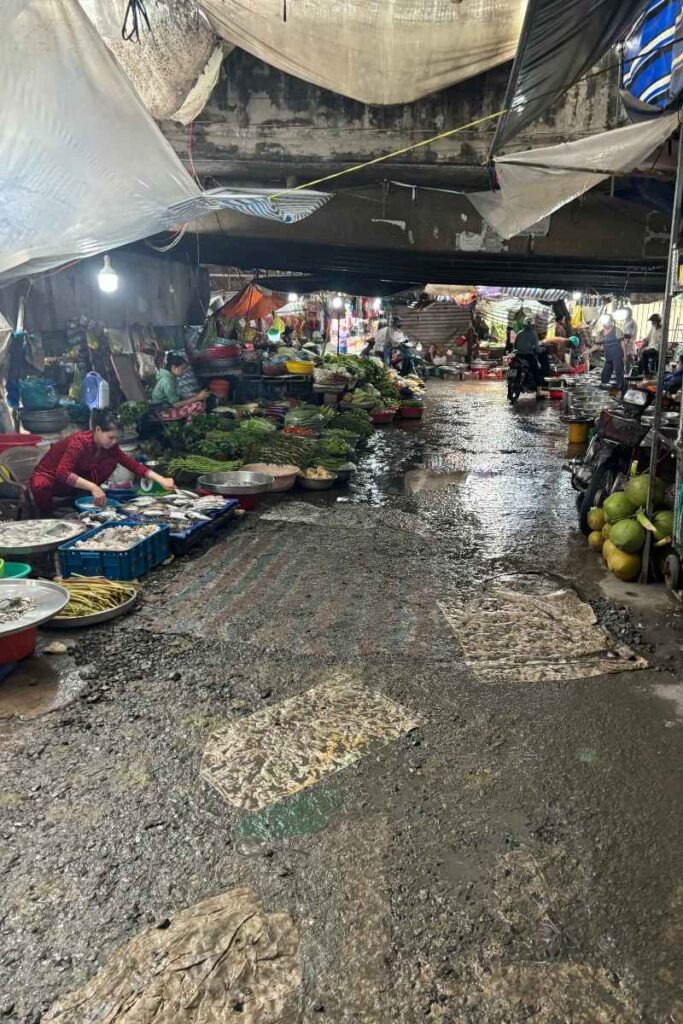
The Cai Be floating market may be permanently closed, but there’s still a cool market on the water. The market is massive. There are rows and rows of everything you can imagine, including fresh fish (alive and swimming around in little plastic bins), poultry, spices, vegetables, fruits, and everything.
The market is one of my favorites in Vietnam, which says a lot. It’s not a big tourist attraction, but it’s clearly where everyone goes shopping, so it’s a great place for people to watch, observe, and experience local life.
It’s not the Cai Be floating market, but right on the water. I recommend wearing closed-toe shoes because the floor can get dirty and muddy (especially during the rainy season).
Take a photo at the Cai Be Cathedral
Cai Be Cathedral: Google Maps Location
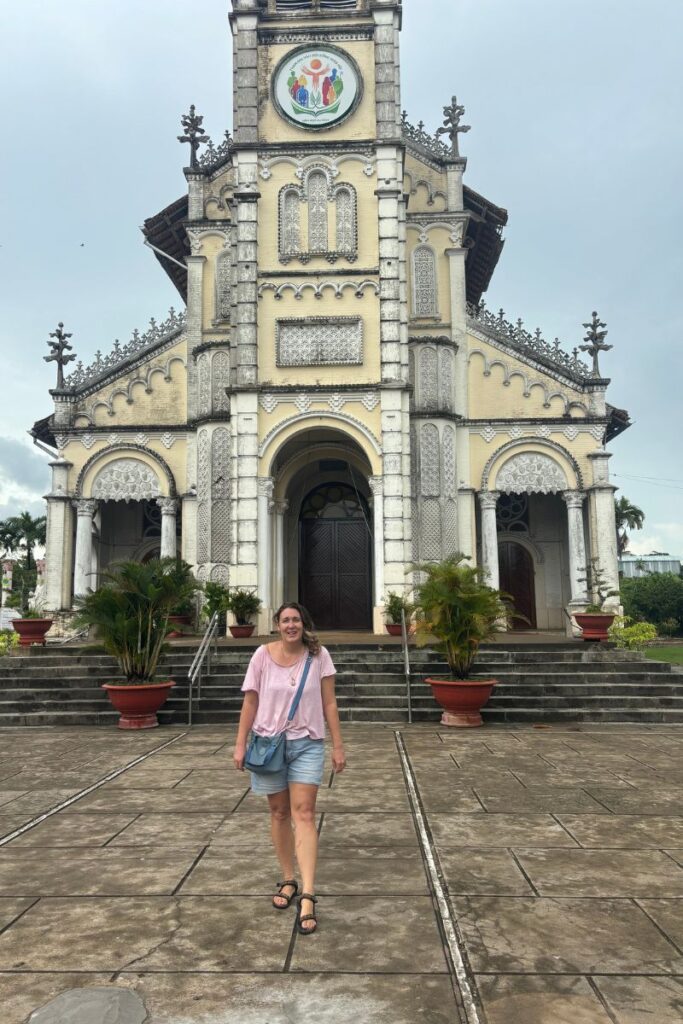
The Cai Be Cathedral is an icon of the village. You can see it from almost anywhere in town, and it’s a beautiful piece of French architecture. I recommend visiting (easiest to go by bike) and taking a few pictures. It’s also in a very local area, so exploring and learning more about local life is fun.
Visit a bee farm
We visited a local bee farm on the Mekong River tour, but if you aren’t taking the same tour, you can also try to visit a local bee farm. This region is known for its delicious honey, and there are tons of little bee farms to choose from (like this one on Google Maps).
Most bee farms aren’t built up to be big touring operations, but they let you hold the hive (they say they are stingless bees), and you can sample some of the honey. They usually sell other products, like the royal jelly (we got to taste it; I wasn’t a big fan of the texture, but it’s interesting). They say nothing goes to waste.
Head to the village where they make rice paper, rice candies, and more
My Long Rice Paper Village: Google Maps Location
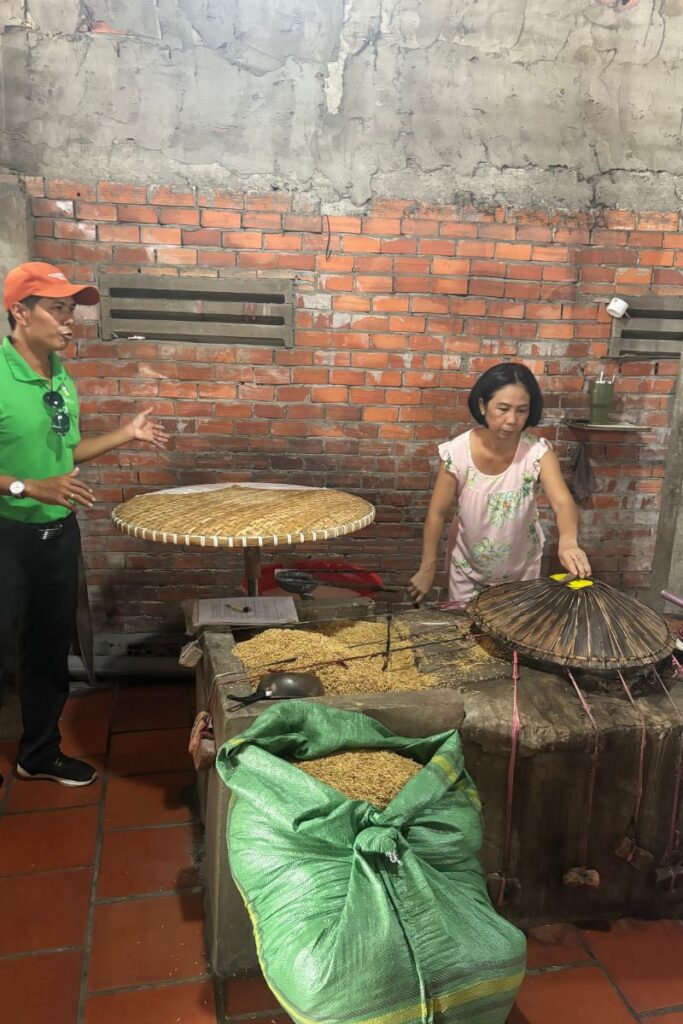
Our Mekong River tour took us to a local village where they made rice paper, candies, and coconut candies. I’m usually not interested in these handicrafts because they always feel overly touristy, but this one felt authentic.
It was a small-scale operation where people legitimately made all the goods and were happy to walk you through the process.
They also let you taste all the goodies (including rice popcorn, rice cakes, rice wine, coconut candies, and more), and it was all really good.

Take the ferry across the river to the island
Ferry from Cai Be: Google Maps Location
You can also take a ferry from Cai Be to Tan Phong Island. It’s a local island, so it’s just another place to explore, see local life, and enjoy its beauty. The ferry is only for motorbikes, bicycles, and people walking. It comes every 15-20 minutes or so and is pretty fast.
Relax on the Mekong
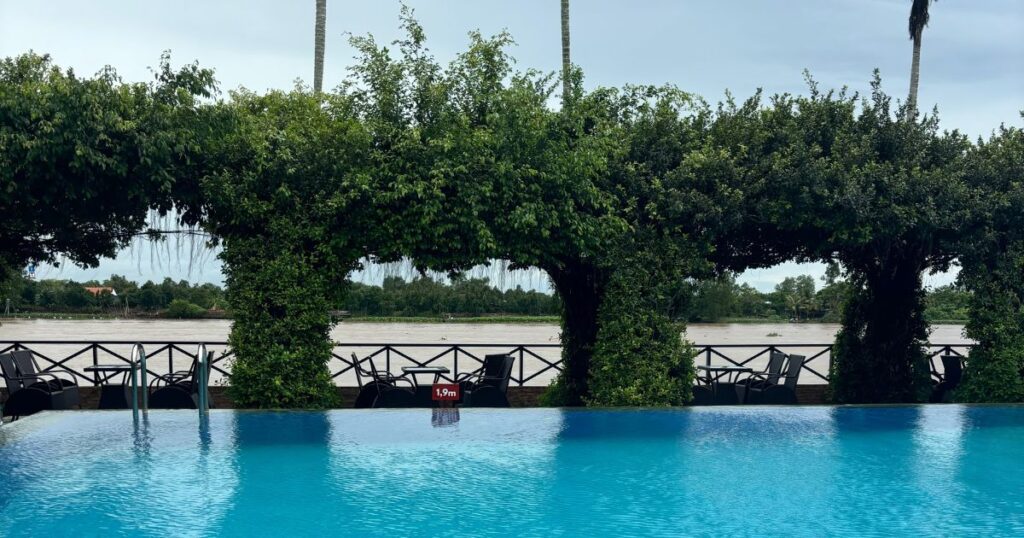
Of course, one of the best things to do on the Mekong Delta is to enjoy the Mekong. Maybe it’s just me, but there’s something soothing about the river. Our hotel had a lovely pool and restaurant right on the river, with some great views, and I enjoyed just relaxing and soaking it all in. If you have the time, set aside some time to enjoy.

Where To Stay In Cai Be Village
We stayed at Mekong Lodge Resort in Cai Be and loved it. The staff went out of their way to make sure you’re comfortable, the property grounds are nice, and the food in the restaurant is good. However, there are a few other popular options in the area. Here are some recommendations:

Mekong Lodge Resort
As I mentioned, we stayed at Mekong Lodge Resort, and I don’t think I’d want to stay anywhere else.
It’s your standard lodge, located right on the Mekong (the views from the restaurant and pool are right on the water; you couldn’t possibly get any closer). The rooms were massive, and our bathroom was actually bigger than the room. The lodge has hot water, some rooms have a private plunge pool right out front, and all the essential amenities.
The lodge offers a better buffet breakfast than your standard buffet. It features a fresh omelet station, fresh fruit, a toasting station, and other classics like rice, cooked vegetables, and breakfast sausage.
We booked several tours through the hotel (the main ones are the Mekong River tour and a bicycle tour), which was very convenient because they pick you up right at the docks.
The pool is also nice and clean and has good views. Not many people stayed at the lodge when we were there, so we mostly had the pool to ourselves. The only thing I disliked was that there were no sunbeds out in the sun. They were all in the shade.
Before leaving for the lodge, talk to them about transportation. Because there are no real roads leading to the hotel, you can’t get there by car or bus, so they’ll arrange a free ferry shuttle.
Other accommodations in Cai Be
If you’d like to stay somewhere different, here are some other popular hotels in Cai Be:
- Sao Mai Hotel – This is one of the most popular places to stay in Cai Be. It’s a little, family-run homestay in a house near the village. It’s a good location with great staff, and they can help you organize tours.
- Nam Thi Holiday Home – This is another quintessential homestay, a good experience for somewhere as authentic as Cai Be. It has a nice balcony right on the river, as well.
- Mekong Riverside Boutique Resort & Spa – This is another fancier, lodge-style accommodation in Cai Be. It’s in a peaceful, quiet area strongly connected to nature.
Whichever you choose, you’ll fall in love with the village. As long as they have legitimate reviews, it’s hard to go wrong with how neat this area is.
Useful Information Before Visiting Cai Be Vietnam
Before leaving the chaos of Ho Chi Minh City for Cai Be (or wherever else you’re based), here are some other important things to know about the area:
Weather and the best time to visit Cai Be
The rainy season in Cai Be lasts from May to November (though it sometimes extends into December). It can be intense, with heavy downpours lasting a few hours. Considering that many of the best things to do in Cai Be are outside, it can be a gamble about whether it’s worth it.
The dry season in Cai Be is from December to April (these are the same seasons as HCMC). It’ll be hot, humid, sunny, and dry enough to enjoy all the outdoor activities.
We visited Cai Be in August, right in the middle of the rainy season, and it wasn’t that bad. It rained on our first day there, we still rode bikes and explored the city, though, because it was just a sprinkle. It rained basically throughout the night, and on the day of our Mekong River tour, it cleared up for a few hours to give us some perfect weather.

How long to stay in Cai Be
I recommend spending 2-3 days in Cai Be, Vietnam. This gives you plenty of time to do a boat tour, explore the village, and see what else is around. It also sets aside enough time to relax and enjoy the pool.
If you’re in a hurry, you can also stay one night with two almost full days for adventuring. For example, if you stay one night, you can:
- Arrive before or around 3:00 pm, check in, and grab some bicycles to explore the city. If you leave early enough, you might have time to explore the island before dark.
- The next morning, you can go on a morning Mekong river tour that departs around 8:00 am; you should be back around noon.
- After the boat tour, you can pack up and enjoy the pool or go on another bike ride before departing.
If you stay two or three nights, you have more time for everything without feeling rushed. Some people also visit on a day trip from Ho Chi Minh City. You’ll have to leave early, and you won’t have that much time to explore the town, but it’s doable.
What to pack for Cai Be
If you’re planning on staying 1+ night(s) in Cai Be, here are some packing essentials:
- Bugspray: There are tons of mosquitoes; you should always have bug spray with you in Vietnam.
- Sunscreen: It can also get sunny and hot, so sunscreen is another must.
- Good walking shoes or sandles: The lodge we stayed at had some really muddy backroads, and we did some exploring on the boat tour, so good walking shoes were nice.
- Bathing suit: Most of the lodges in Cai Be have nice outdoor swimming pools, so bring your bathing suit.
- Battery pack: This is another travel necessity that should just be with you at all times, but it can be helpful here so you can access all your apps and stuff if you’re out exploring for the day.
You should also pack all the usual items for Vietnam, such as comfortable travel clothes (including long pants or leggings), a quick-dry towel, and extra socks.

Why Cai Be Is My Favorite Place On The Mekong Delta
I’ve visited several places along the Mekong Delta, and Cai Be is my favorite. There’s a little less to do than in Can Tho, another city on the Mekong Delta, but it’s the perfect balance of relaxation and excitement. And to top it all off, it feels very authentic.
Overall, I’m such a sucker for nature, though. Most people don’t realize how much nature there is so close to HCMC, too, like Monkey Island and Cat Tien National Park. Cai Be village is another natural beauty with a rich history.
These are the types of places that make Ho Chi Minh City worth visiting, in my opinion.
Have you ever traveled to the Mekong Delta before? Would you prefer a place like Cai Be, which is more laid-back and peaceful, or Can Tho, which is a little more chaotic and busy?



Leave a Reply