

My Son Sanctuary (Mỹ Sơn) is a UNESCO World Heritage Site in Vietnam’s Quang Nam province. A vast Hindu temple complex, My Son vividly brings a lesser-known period of Vietnamese history to life.
One balmy Tuesday morning, we rented a motorbike and headed southwest out of the historic town of Hoi An. We zoomed past jade-green rice paddies, quaint villages, and waving children on our way to My Son Sanctuary.
Before the day was through, we’d see plenty of breathtaking natural beauty and human-made relics of a past we knew little about, while also learning about a unique slice of Vietnamese culture that doesn’t make it into most Western textbooks.
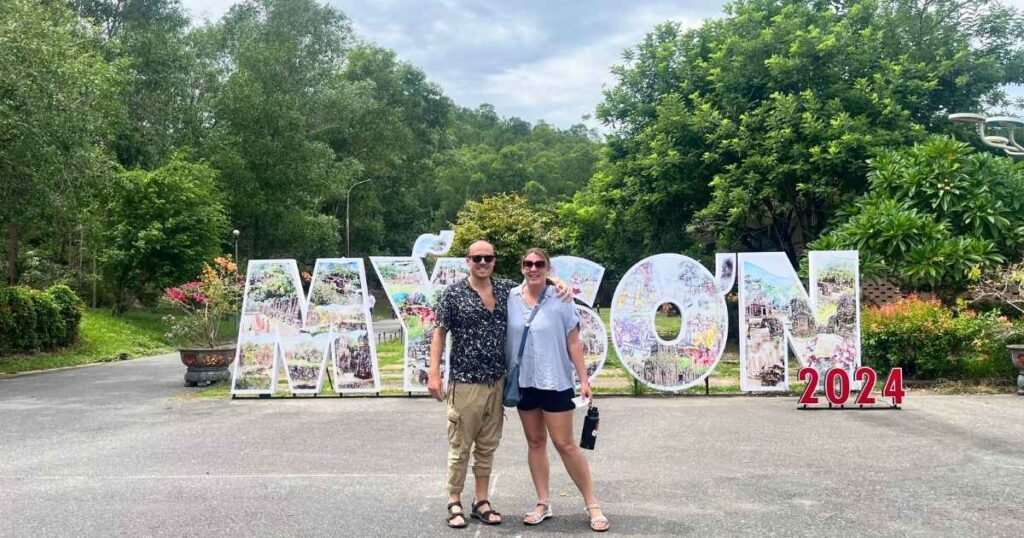
What Is My Son Sanctuary?
Designed and constructed by the Cham (Champa) people between the 4th and 15th centuries AD, My Son served as the cultural beating heart of the Kingdom of Champa for over 1,000 years. Spanning the reigns of dozens of kings, the site stood as tribute to the Hindu god Shiva, whom the Cham called Bhadresvara.
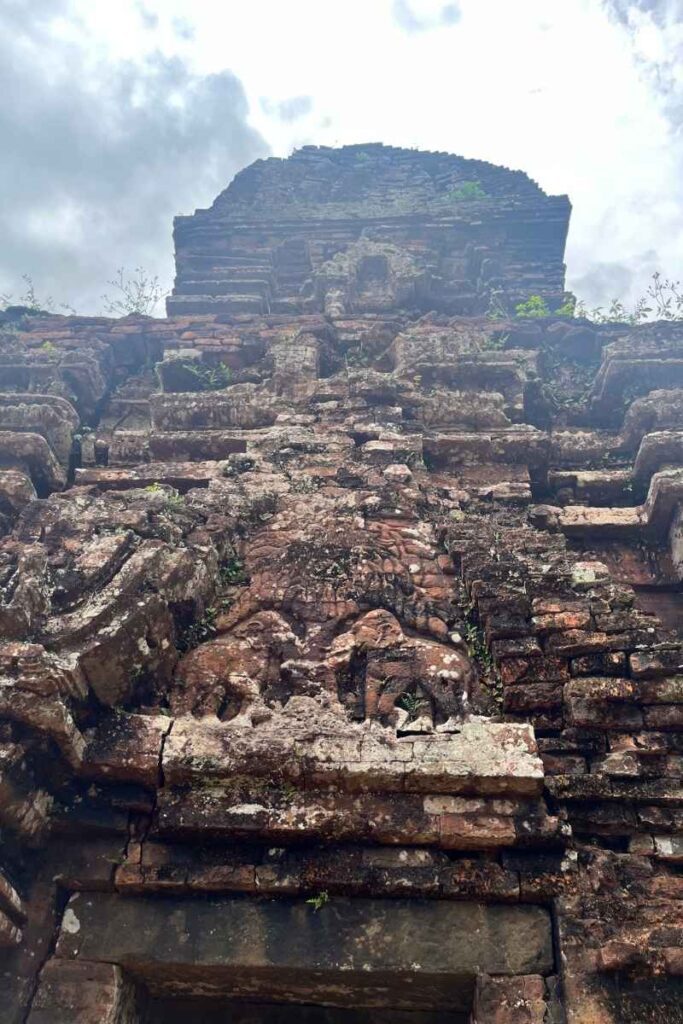
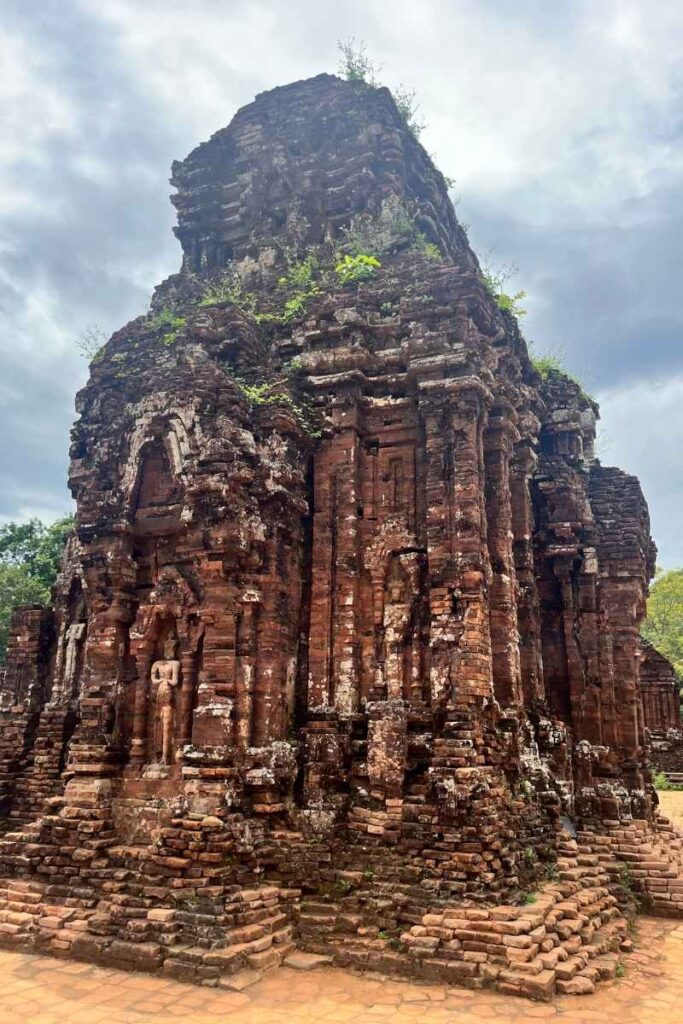
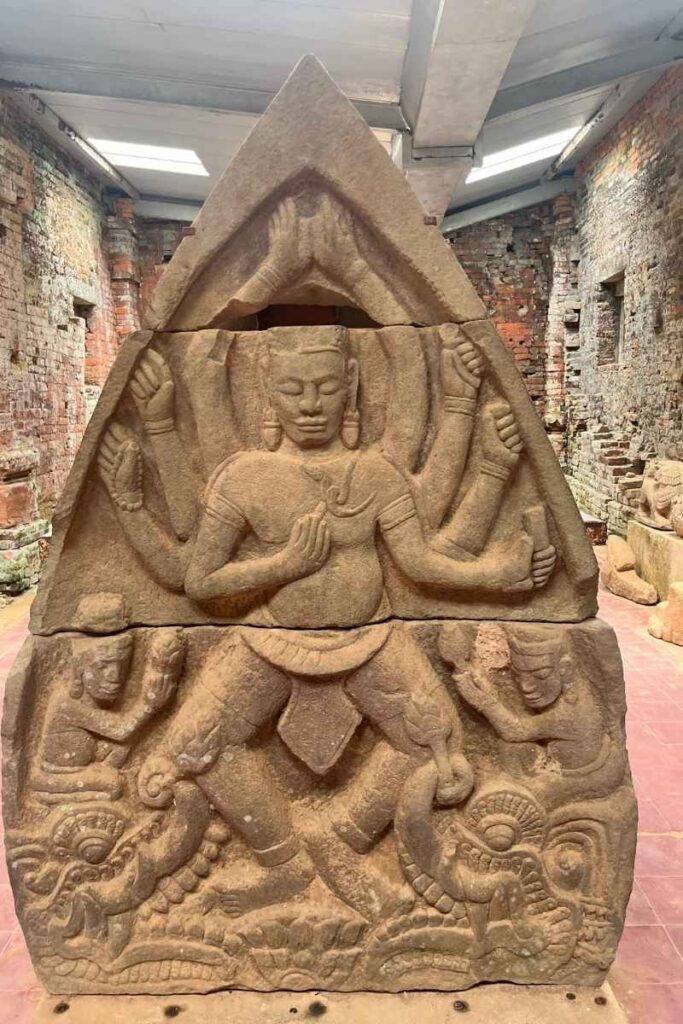
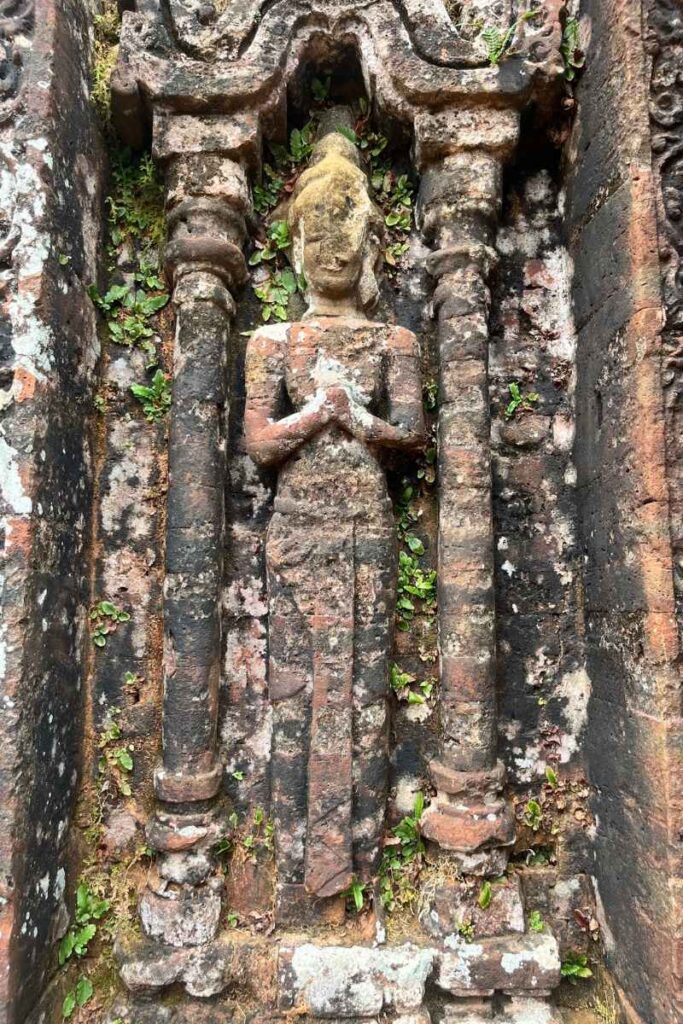
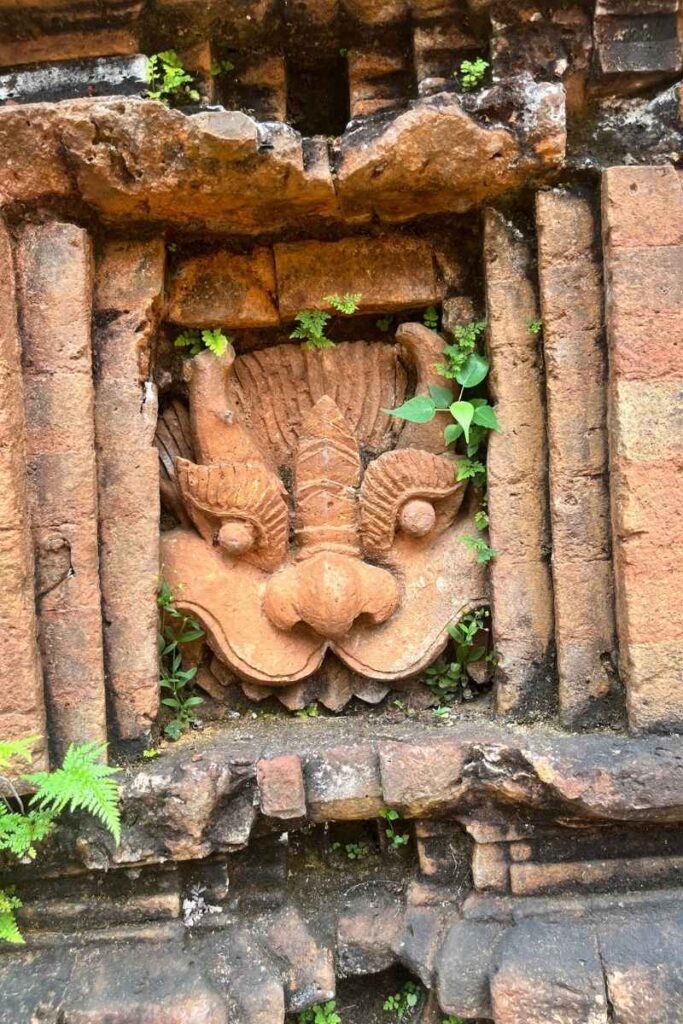
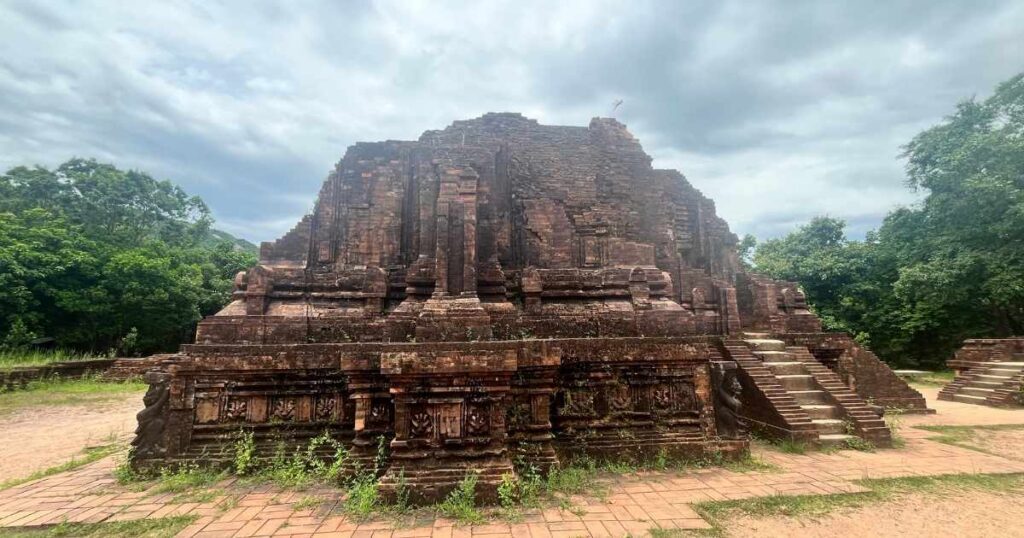
Consisting of over earthen-red brick and mortar towers, vestibules, and shrines adorned with carvings of sacred deities and spiritual messages written in Sanskrit, My Son became a special place of worship and political intrigue. Over the years, more than 70 temples were added, some depicting notable military victories and others Hindu deities such as Vishnu and Krishna.
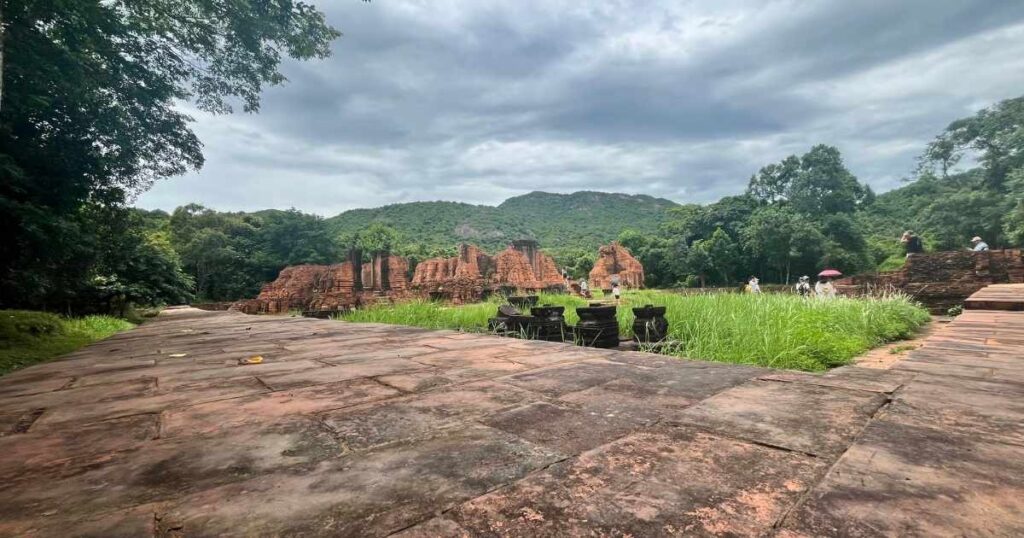
However, by the latter half of the 15th century, the Kingdom of Champa was rapidly losing territory to the Viet people (Đại Việt). After a 1471 invasion by the powerful Lê dynasty, the Cham royals were forced to flee south, abandoning My Son. As the Cham’s influence dissipated in Central Vietnam, the once crucial spiritual center fell into disrepair, ultimately being reclaimed by the jungle.
That was until 1898, when French archaeologist Henri Parmentier rediscovered the My Son ruins and began excavating. He and his team recovered an array of long-forgotten, or at least long-neglected, artifacts, and after several decades of work, My Son was almost entirely restored. Sadly, in the chaos of the Vietnam War (American War or Second Indochina War), My Son suffered heavy bombing by American B-52s, which destroyed numerous structures.
Fortunately, in the 1980s and 1990s, the Vietnamese and Polish governments spearheaded a joint restoration effort. The legendary Polish architect, conservationist, and historian Kazimierz Kwiatkowski worked closely with his Vietnamese colleagues to painstakingly recreate the infrastructure of My Son. Thanks to their loving labor, My Son Sanctuary was declared a UNESCO World Heritage Site in 1999. Today, it’s one of Southeast Asia’s most important historical sites and a popular tourist attraction in central Vietnam.
How To Get To My Son Sanctuary
My Son Sanctuary Vietnam is in the Duy Xuyên District of Quảng Nam Province, approximately 70 km (43.5 mi) southwest of Da Nang and 40 km (25 mi) southwest of Hoi An. But, how exactly do you get there?
Book a My Son Sanctuary tour
There’s no shortage of My Son Sanctuary Tour options in Da Nang and Hoi An. If you go for a stroll in Old Town Hoi An, you’ll almost certainly be approached by people selling tour packages that involve the My Son ruins.
Some operators may offer tours with multiple sites, such as Ba Na Hills (The Golden Hand Bridge), Marble Mountains, and others. However, if you have the time, we suggest setting aside a day to visit each of these places because, while each site could be done individually in half a day, visiting them all in one day will be a rushed experience.
We recommend booking this My Son Sanctuary tour, a small group tour leaving early in the morning, if you’re in Hoi An. If you’re staying in Da Nang, this My Son Sanctuary tour is a good choice, as it also departs early. Plus, it includes breakfast. However, it’s worth noting that booking a tour from Hoi An is more convenient. So, if you’re visiting both Da Nang and Hoi An on your Vietnam trip, you’ll be better off going to My Son Sanctuary during your stay in Hoi An.
Take a shuttle bus
Shuttle buses depart from Hoi An and Da Nang to the My Son Sanctuary daily. While they won’t provide you with a tour guide, as you would get with the day tours mentioned above, shuttle buses offer a more affordable but still convenient option.
Most shuttle buses leave around 8:00 a.m. and arrive at My Son around 9:15-9:30. From there, you’ll get about 3 hours to explore the grounds before being shuttled back to your starting point.
Typically, you’ll have to travel to a meeting point before getting on your shuttle bus, so you may have to pay for a Grab (or other rideshare app) and leave your accommodations early to arrive on time. If you’re interested in taking a shuttle, we suggest this shuttle bus service to My Son, which has received rave reviews and runs every day from Da Nang and Hoi An.
Book a private car
There are plenty of private drivers who, for the right price, will take you from Hoi An, Da Nang, or even Hue to My Son Sanctuary. Though it’s more expensive than taking a shuttle bus or going with a group tour, a private car gives you optimal flexibility with departure times and allows you to ride in style and luxury.
We didn’t use a private car service in Central Vietnam. However, we’ve found that most charge approximately 600,000-800,000 VND ($23-$26) per person from Da Nang to My Son and 450,000-800,000 VND ($17-$26) per person from Hoi An to My Son. You should get a cheaper rate with more people, and some private car services allow up to 10 people per group.
However, if you don’t feel the need to shop around or haggle, we recommend booking this private car service. These folks offer a highly regarded service with hotel pickup and drop-off, as well as various departure times. You can also hire an English-speaking guide at My Son for an additional 500,000 VND ($19.25).
Rent a motorbike & drive yourself
Driving a motorbike from Hoi An or Da Nang to My Son Sanctuary can be an excellent adventure for experienced riders with the proper credentials. We rode our rented motorbike from Hoi An on a glorious, sunny day, and it was one of the more scenic rides we’ve done in Vietnam.
If you’re leaving Old Town Hoi An, as we did, head south before swinging a right onto Trường Sa, a road near the village of Duy Phước. This rustic avenue will take you out to DT. 610, the route that straddles the Thu Bồn River. You can follow this to get to My Son. If you’re leaving from Da Nang, you’ll want to drive south of the city and link up with DT605, which runs south to My Son.
The road from Hoi An to My Son is well-maintained and relatively easy to drive. Outside Hoi An, the landscape quickly becomes rural, and traffic decreases significantly. At least initially, the road from Da Nang is a bit more chaotic and heavily used by trucks, cars, and motorbikes. However, traffic drops once you leave the city limits, and the ride becomes more enjoyable.
We rented our motorbike from our guesthouse, Little Library Villa Hoi An, which we highly recommend. It costs just 150,00 VND ($5.74) per day, and the owners are incredibly kind, helpful, and trustworthy.
What To Expect At My Son Sanctuary
As you might assume, you’ll see a variety of ancient structures at My Son Sanctuary, aka My Son Ruins.
With over 70 intact structures, many dating back about 1,000 years, My Son is sometimes called the Angkor Wat of Vietnam. While this may be a bit misleading, since it’s only a fraction of the size of its Cambodian counterpart, there’s still a lot to see and do at My Son, Vietnam.
Almost 100 years ago, French archaeologists grouped the buildings at My Son into blocks based on their location and the period in which they were built. Here’s an overview of each group you’ll encounter on the property, and more information on other things to see here.
Temple Group A
The Cham people built the structures in My Son’s temple group A between the 10th and 13th centuries. In this space, you’ll find a litany of architectural marvels, including Temple A1, one of the grandest, most ornate structures at My Son during the height of the Kingdom of Champa.
French archaeologists restored many buildings in temple group A during the early 20th century. However, this section of My Son was almost entirely obliterated by American munitions during the Vietnam War (American War).
In just the last few years, efforts by the Archaeological Survey of India in conjunction with the people of Vietnam have restored many of the structures in My Son Group A.
Temple Groups B, C, & D
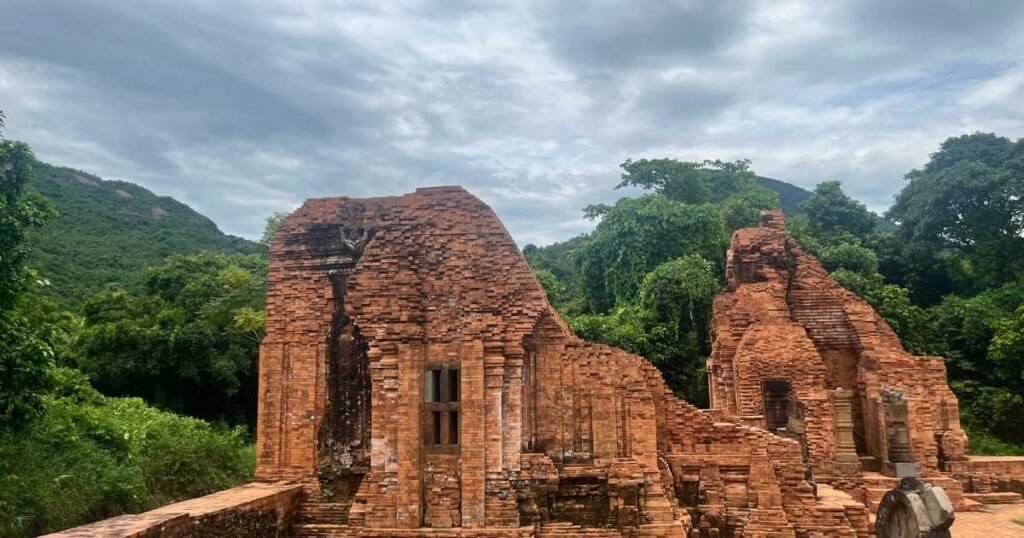
The largest cluster of buildings at My Son Sanctuary, temple groups B, C, and D, consists of over 20 individual structures, including temples and auxiliary towers, some of which date back to the 8th century.
This is the main section most people visit and spend time in when traversing the trails at My Son. It’s a visually stunning amalgamation of earthen-red bricks that display Champa architecture in all its glory.
Groups B, C, and D were restored by French archaeologists in the 1930s, damaged during the Vietnam War, and restored for a second time by the Polish-Vietnamese expedition in the 1980s.
Temple Groups E, F, & G
Next to temple groups B, C, and D, you’ll find temple groups E, F, and G. Tucked away behind the primary tourist areas at My Son, these partially restored temples are less visited, offering some respite from the crowds of high season.
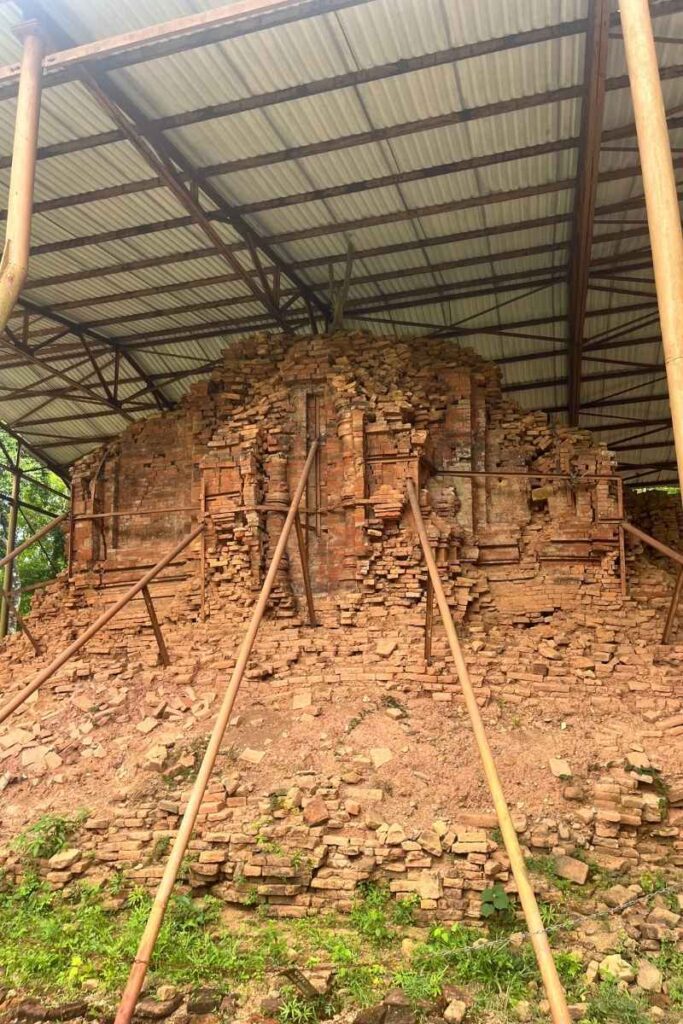
These structures here are not nearly as visually appealing as those in the temple groups mentioned above. However, they give you a glimpse of what My Son might look like without restoration efforts.
Some partially restored temples, including the main temple of the F Group (F1), are covered by tin roofs and inaccessible, but others, like Temple G1, have been fully restored and can be entered.
Temple Groups H & K
Some of the last temples to be built at My Son are in temple groups H and K. Like their counterparts in temple groups E, F, and G, the structures in groups H and K are somewhat off the beaten path.
Many of these temples were restored in the past few years thanks to efforts driven by the Archaeological Survey of India. However, they aren’t nearly as large or ornate as the temples in groups A, B, C, and D.
That said, if you’re still up for temples on your way toward the exit, it’s worth stopping off at the structures here. When we toured the My Son temple groups H and K, we had the place all to ourselves.
The My Son Museum
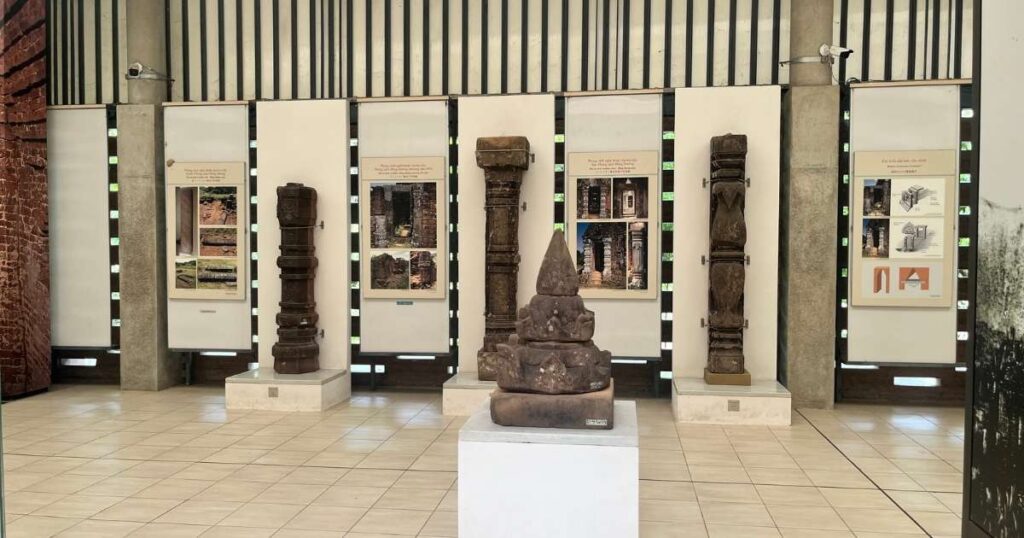
The My Son Museum, located just inside the gate to My Son Sanctuary, gives some insight into what you’ll see inside the historic Cham ruins.
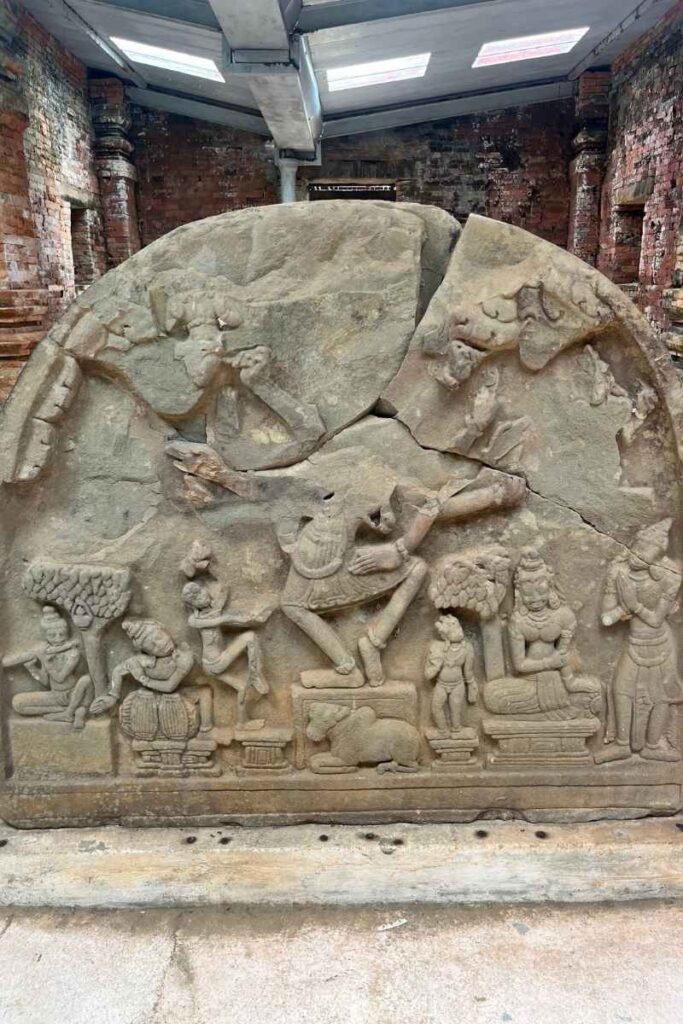
A permanent exhibition describes the interior of My Son Sanctuary in considerable detail and provides information on the Cham people and ongoing temple preservation efforts.
We spent about 10 minutes walking around the museum. Since we knew little about the Kingdom of Champa and its traditions, this helped give us a feel for what we’d be looking at once we started climbing the temples of My Son.
The Cham Folk Art Exhibition
There is a Cham Folk Art Exhibition on the grounds of My Son Sanctuary. Here, local Cham People adorned in traditional clothing play music and do dances that have been performed for generations.
Shows occur daily in the covered stage area of the Cham Folk Art Performance Hall at 10:45 a.m., 2:00 p.m., and 2 p.m. An earlier show also takes place at 9:45 a.m. near temple group G.
We caught the 10:45 a.m. show in the performance hall. There were plenty of chairs for all patrons, and we were treated to a colorful performance that lasted about 15 minutes. It was certainly worth it for us!
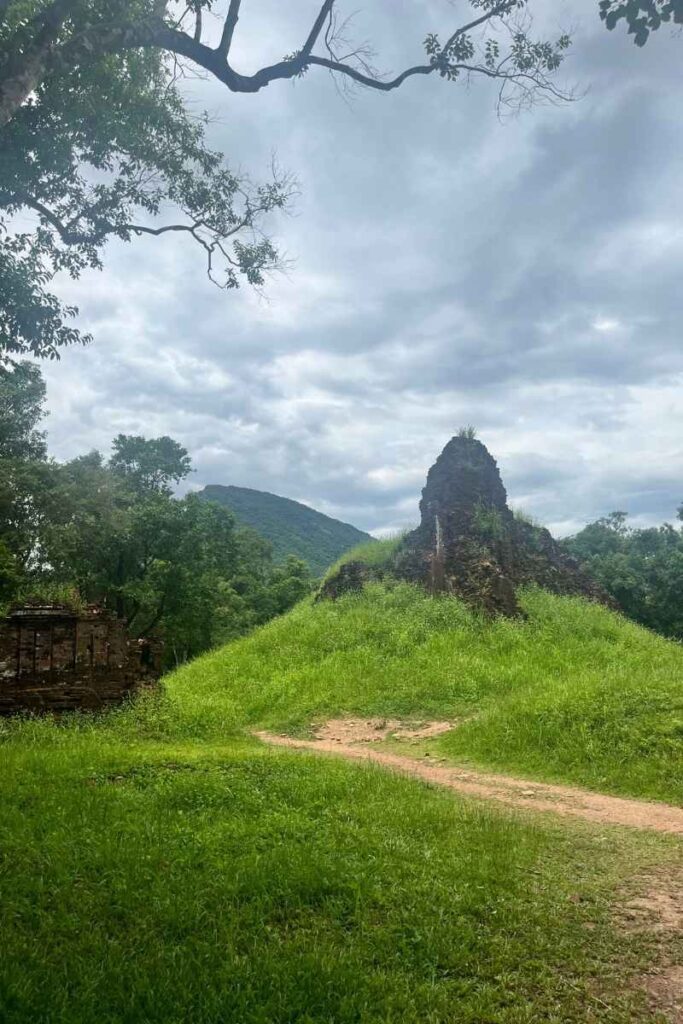
Cat’s Tooth Mountain (Núi Răng Mèo)
Núi Răng Mèo, aka Cat’s Tooth Mountain, dominates the skyline at My Son Sanctuary. The Cham people believed this summit represented masculine energy, while the surrounding valleys represented feminine energy.
According to their sect of Hinduism, when masculine and feminine energies were in perfect harmony, as they were here, healthiness and prosperity would come. So, Núi Răng Mèo, which as you’ve probably guessed vaguely resembles a cat’s tooth, became a sacred place to them.
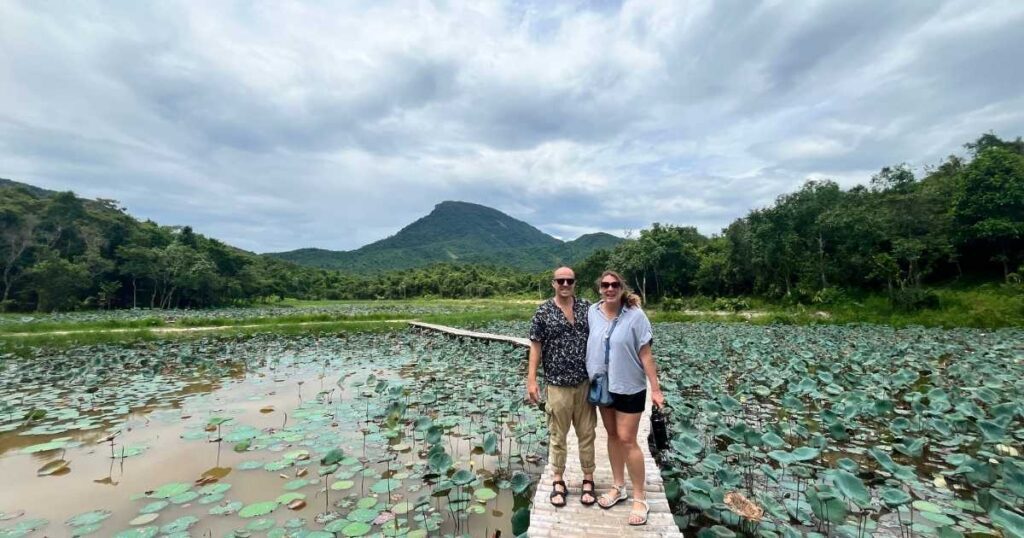
Standing 730 m (2,400 ft) above sea level, the jagged mountain peak sits south of the My Son Ruins. As you walk along the path to the temples, you’ll see a boardwalk that crisscrosses a shallow lake in front of Cat’s Tooth Mountain. This is a nice place to explore for a few minutes. You can also take cool pictures in front of these hallowed grounds.
How Much Does It Cost To Visit My Son Sanctuary?
When we visited My Son Sanctuary (July 2024), the entrance fee was 150,000 VND ($5.78) for non-Vietnamese adults and 30,000 VND ($1.16) for children between the ages of 5 and 16. Kids under 5 enter for free, and Vietnamese citizens pay a lower rate (100,000 VND).
All things considered, we felt the price of admission was fair. Though paying more as a foreigner might rub some people the wrong way, it’s common practice at cultural sites throughout Southeast Asia and an understandable policy for us.
My Son Sanctuary is open every day from 5 a.m. to 6 p.m. As mentioned above, English-speaking guides are available on-site for an additional 500,000 VND ($19.25). If you’d prefer, an audio guide is also available for 70,000 VND ($2.70) plus a 50,000 VND ($1.93) headphone rental fee.
When Is The Best Time To Visit My Son Sanctuary?
As you may know, the weather in Vietnam can be quite volatile. Certain times of the year see humid temperatures and heavy daily rainfall, while others are milder and drier.
The best time to visit My Son Sanctuary is from late February to early May. This is the heart of Central Vietnam’s dry season, when temperatures are typically comfortable, with low humidity and sparse rainfall. June, July, and August should also be dry. However, on average, temperatures soar to 34-38℃ (94-100℉), making the midday heat almost unbearable.
If you want to visit My Son Sanctuary at another time of the year, you certainly can. However, just remember that rainfall occurs frequently during the rainy season (September-January), with heavy showers often coming in the afternoon, especially during October and November.
No matter what time of year you visit My Son, we always advise getting there early, preferably between 6:00 and 8:30 a.m. This is when temperatures are cooler, crowds are thinner, and rainfall is less likely. Plus, the soft morning light makes for better photos, and you’ll have plenty of time to catch the Cham cultural performances, should you choose to do so.
More Tips For Visiting My Son Sanctuary
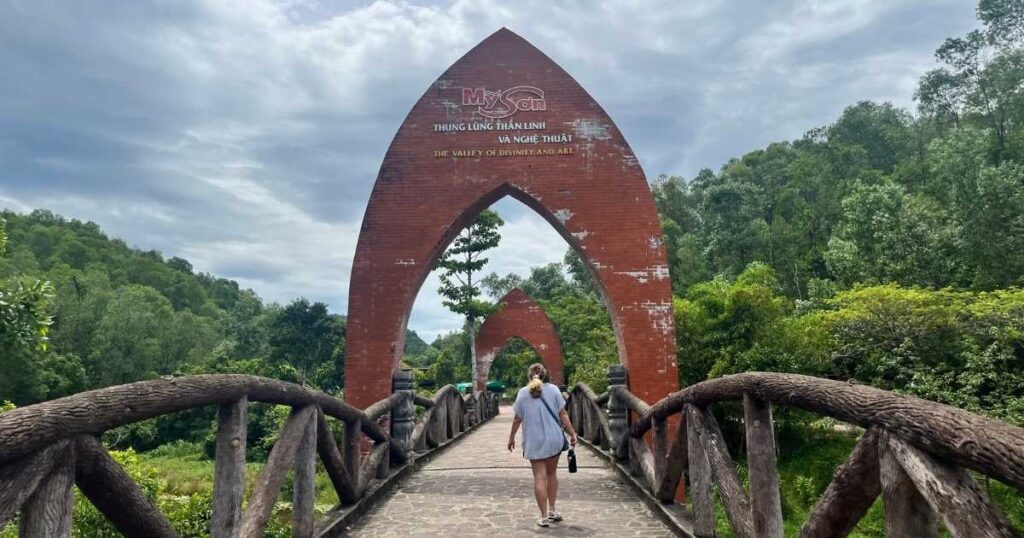
Want more tips for visiting My Son Sanctuary? After taking a day trip from Hoi An to My Son Sanctuary, here are our top tips.
1. Hire a guide/book a tour
While My Son Ruins is undoubtedly a stunningly beautiful place, walking around without a guide leaves out much of the context you’ll need to understand its historical significance.
That’s why we recommend hiring a guide on-site or going on a small group tour that provides you with transport and a knowledgeable English-speaking guide. For the best experience, we suggest booking an early morning My Son Sanctuary tour.
Small group tours vary in price, but they are available for about 500,000 VND ($19.25) per person.
2. Dress for the setting
The sun is powerful in most of Vietnam, and since there’s minimal tree cover at My Son Sanctuary, you’ll want to wear lightweight clothing that covers your skin. A hat and sunglasses are also helpful.
With that said, unlike most temples in Southeast Asia, My Son doesn’t have a strict dress code. So, while we’d suggest dressing respectfully (as it is technically a religious site), you’ll still be allowed in if you’re rocking a tank top and shorts.
Wear comfortable shoes (preferably sneakers or trainers), too, because a fair amount of walking is involved, and if it rains, the smooth stone surfaces can get slippery.
3. Watch The Cham cultural performance
The short Cham cultural show is worth watching. It only lasts about 15 minutes but packs loads of valuable information on Cham traditions and history into that time.
Plus, the shows in the performance hall provide you with a break from the sunlight, heat, and continuous walking. Be sure to arrive 5-10 minutes before the show begins to get a good seat.
Shows take place every day at 9:45 a.m., 10:45 a.m., 2:00 p.m., and 3:00 p.m., and schedules are available at the ticketing booth.
4. Use the toilet at the entrance
If you have even the slightest urge to go, it’s best to use the toilet at the entrance to the My Son ruins.
That’s because once you get into the temple area, there are no sanitary facilities, and despite being a relatively small place, the loop trail takes anywhere from 1 to 2 hours to complete.
So, do yourself a favor and ensure you’ve relieved yourself before jumping into extensive temple exploration.
5. Take your time & savor the experience
Many people rush through the My Son Ruins in 30-45 minutes. Don’t do that! There are so many hidden gems and beautiful structures to enjoy at this site. Sit, savor, and drink it in!
Although sometimes called the Angkor Wat of Vietnam, My Son Sanctuary is substantially smaller than the Khmer ruins in Siem Reap, Cambodia. There’s no need to feel rushed.
You can easily walk around all of My Son in under 2 hours, but please take more time if you’d like. Ponder the meaning of the elaborate stone carvings, think about how the Cham people lived, and try to figure out how exactly they built this place so many years ago (something that’s still a point of contention among experts).
Final Thoughts On Visiting My Son Sanctuary
Going to My Son Sanctuary Vietnam is among the best things to do in Da Nang and Hoi An. We’ve even heard of people making the trek from Hue to My Son, though we’d advise against that, as it’s too far.
Our tip to My Son was easily one of our best days in Hoi An, it’s even better if you follow it with a full day trip to Cham Islands. The drive to and from the ancient ruins was spectacular, the temples, backed by lush jungle-covered mountains, were visually dazzling, and the Cham cultural performance was excellent.
So, if you can get from Hoi An or Da Nang to My Son Sanctuary, we say do it!



Leave a Reply