

Monkey Mountain Da Nang, officially known as Son Tra Mountain, sits just a stone’s throw away from the city’s downtown. It offers travelers a unique blend of culture, history, and natural beauty, all within arm’s reach of the popular seaside metropolis.
One sunny day, we decided to play hooky and drive our Suzuki Hayate up Monkey Mountain’s winding roads. We raced across Da Nang’s famed Dragon Bridge before swinging a left and heading north on the tree-lined coastal boulevard, where we passed posh hotels and trendy beach clubs.
Before we knew it, we were surrounded by the abundant greenery of Central Vietnam. As the day progressed, we discovered a former American military installation, found the best hidden beach in Da Nang, and took in the panoramic views of the South China Sea, also known as the East Sea. Now, we’re here to share all the details with you.
What is Monkey Mountain Da Nang?
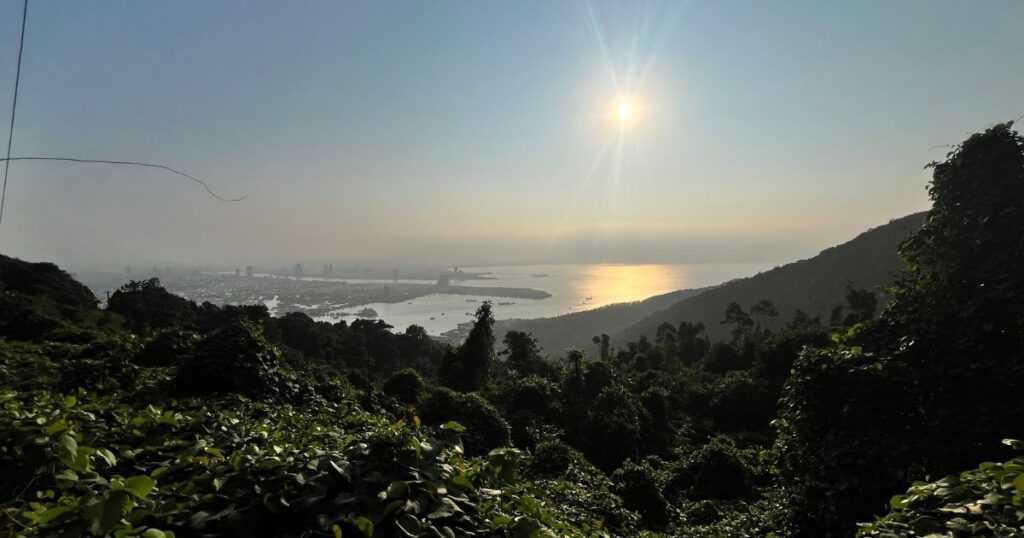
Monkey Mountain is a commonly used nickname for Son Tra Mountain, a jungle-covered 670-meter (2,200-foot) peak located on the Son Tra Peninsula, which juts into the ocean northeast of downtown Da Nang, Vietnam.
As the story goes, this lush hillside received its primate-centric moniker during the Vietnam War (also known as the American War) when soldiers noticed that its primary residents were wild monkeys, including rare red-shanked douc langurs.
These days, the mountain is a protected nature preserve, where you can see a variety of birds, reptiles, and, of course, monkeys. We were lucky enough to catch a glimpse of several monkeys, as well as other animals, and would say this is without a doubt the #1 best place to see monkeys in Da Nang.
Why is Monkey Mountain Notable?
Standing out like a jade giant against the steel skyline of Da Nang, Monkey Mountain serves as a significant historical and cultural landmark, as well as a popular nearby getaway for both locals and tourists.
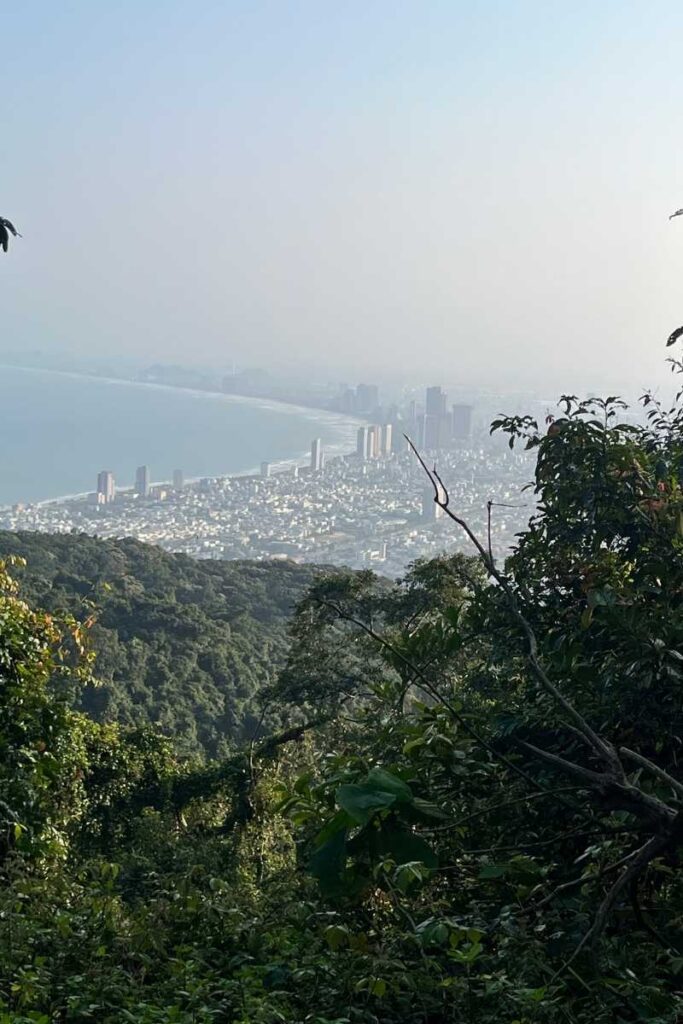
From Ban Co Peak, you’ll be afforded sweeping views of Da Nang’s skyscrapers, and on a clear day, you may even see as far away as Ba Na Hills, Cham Islands, and the Hai Van Pass. In addition, the mountain is surrounded by pristine beaches, such as Bai Bac, Bai Da, and Tien Sa Beach.
Local legends suggest that the mountain was once home to divine beings who chose to stay in this serene space where land, sea, and sky meet. Other stories suggest that the mountain’s forests are home to spirits who still protect Da Nang’s residents from furious storms.
Top Things To Do At Monkey Mountain
Monkey Mountain makes for a great and easy day trip from Da Nang.
Whether you’re a history buff, cultural enthusiast, thrill seeker, nature lover, or all of the above, there’s something for you to do here.
1. Visit Ban Co Peak
Ban Co Peak is a must-do on your trip to Monkey Mountain Da Nang Vietnam. The highest point on the Son Tra Peninsula, Ban Co Peak, also known as “Chessboard Peak,” provides the best views of Da Nang and the surrounding area.
According to folklore, two gods met here to play a game of chess. The game turned into a multi-day battle, and while both players were deep in thought, one was distracted by a fairy, which led to that player losing. Enraged by this, the losing player smashed the chessboard and left, leaving the winning player still seated there, pondering the situation.
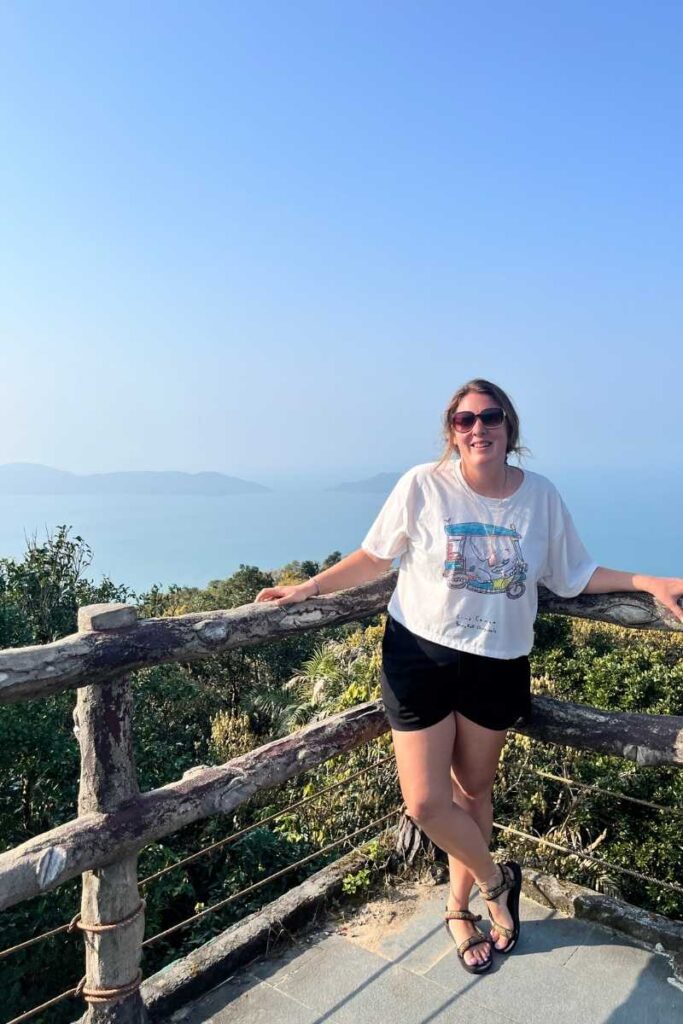
Today, there is a statue in this place, showing the triumphant god still staring at the chessboard, perpetually thinking or celebrating victory, depending on your interpretation. It’s a popular spot for photographs and a nice place to see both the sunrise and the sunset. Ban Co Peak can be accessed by hiking or driving up the scenic Monkey Pass Road.
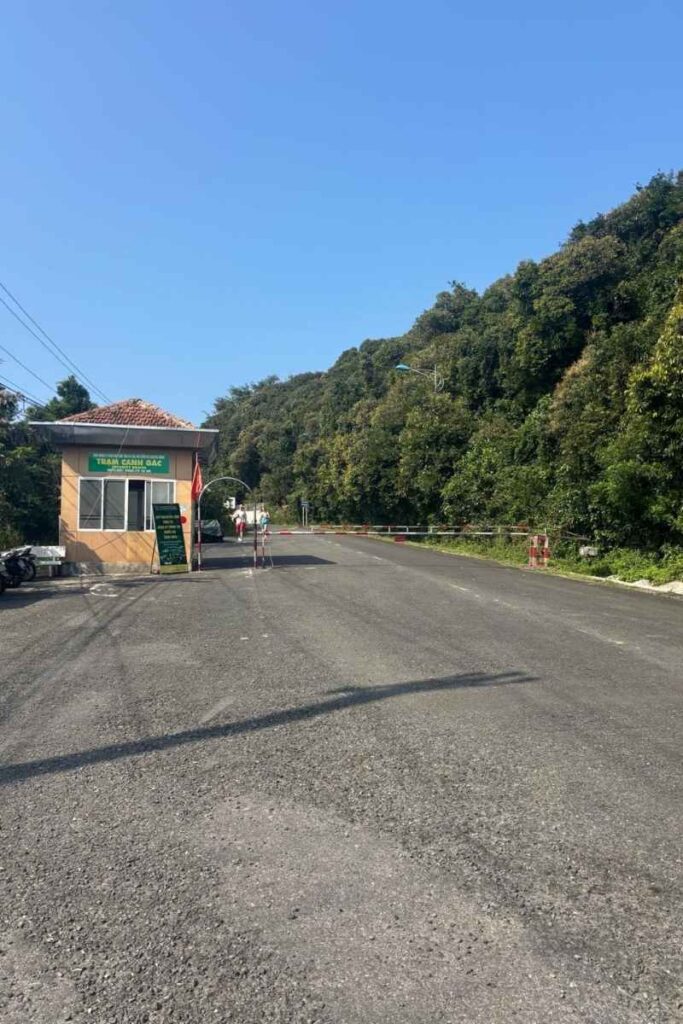
If you’re hiking, be sure to bring plenty of water and sunscreen. If you drive a motorbike, make sure it’s a manual one, as automatics are not allowed above a certain point on Monkey Mountain. There’s an active checkpoint on the road, where an official checks to ensure each bike is a manual. You can also rent a manual motorbike there if you have an automatic.
2. Spot rare wildlife
Monkey Mountain is home to a diverse array of flora and fauna, featuring about 1,000 plant species and 120 animal species, including numerous rare and endangered monkeys and birds.
The most iconic of these is the red-shanked douc langur, a species of monkey found only in this region of Vietnam and some parts of Laos. These colorful primates are discernible by their pale orange face, fiery red legs, and long white tails. Though they are reclusive, it’s somewhat likely you’ll see these monkeys on Monkey Mountain, especially early in the morning or just before sunset.
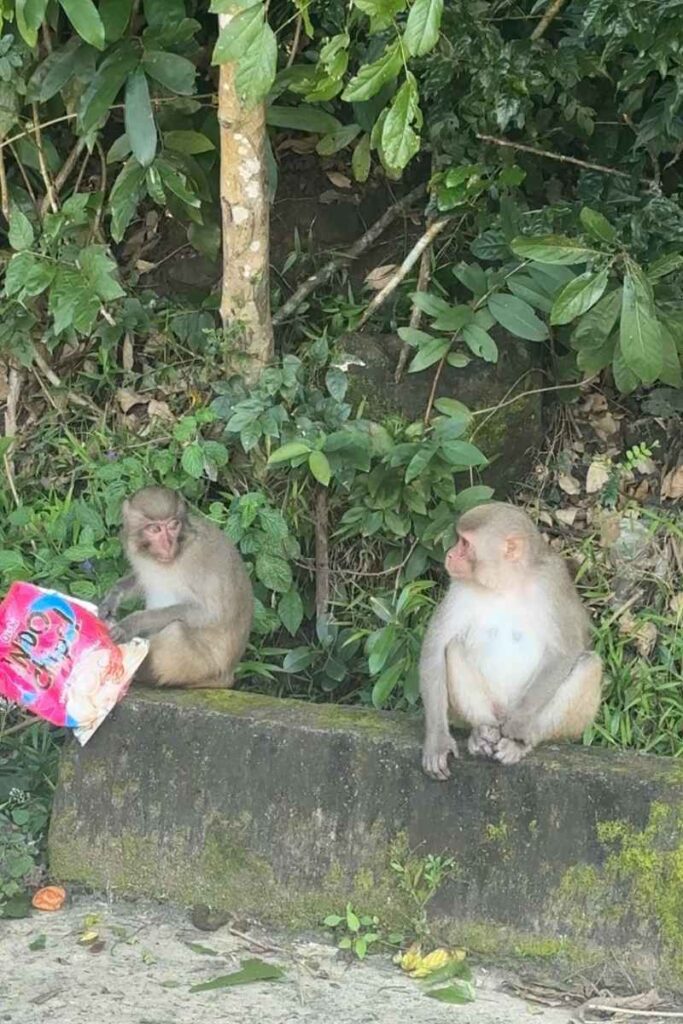
Another more commonly spotted monkey on Monkey Mountain Da Nang is the long-tailed macaque, also known as the crab-eating macaque. These cute little critters have adapted well to human activity and often venture down toward roads, homes, and pagodas in search of food. We saw several of them on our trip to Monkey Mountain, which made our Da Nang monkey experience complete!
Monkey Mountain is also a hotspot for bird watchers, who are looking to get the perfect shot of elusive coastal and forest-dwelling birds. Crested serpent eagles, white-throated kingfishers, and sunbirds can all be found bouncing between trees and traversing the skies around this area.

3. Check out hidden beaches
Numerous untouched stretches of coastline are spread out around the base of Monkey Mountain. Unlike the popular My Khe Beach in downtown Da Nang, these beaches offer you the chance to sunbathe, swim, and relax away from the crowds of tourists.
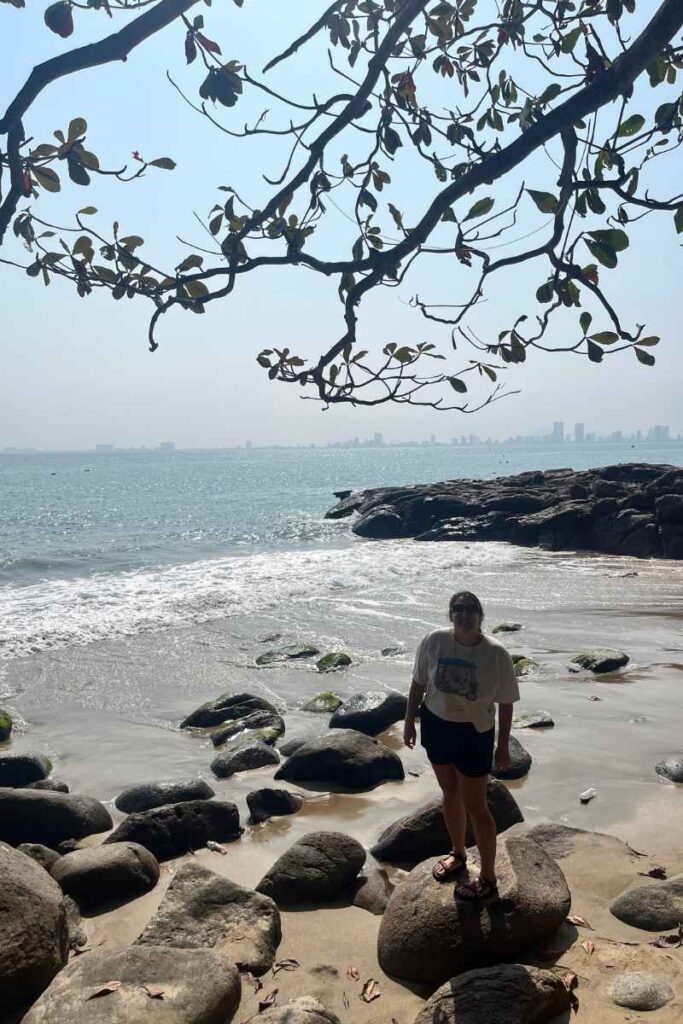
Our favorite hidden beach in Da Nang is Bai Da (Bãi Đá). We happened upon this beach by chance while traversing Monkey Mountain. When we arrived, we found a small group of young Vietnamese sitting in the shade, having a picnic and singing karaoke. Funnily enough, a group of monkeys kept approaching them, slowly creeping closer and closer, which they and we found amusing.
Besides ourselves and the local merrymakers, there were just a few foreigners enjoying this hidden beach. Large rocks surround a small stretch of sand, where swimming is possible. However, the water near the rocks appeared to be pretty rough, so it’s best to swim only in the sandy area, and even then, only if you’re a proficient swimmer.
Other lovely beaches around Monkey Mountain include Bai But (Bãi Bụt), North Beach (Bãi biển Bắc), Bãi Cát Vàng, and Black Rock Beach. Although we didn’t personally spend time on these beaches, we drove past several, and they looked like good spots to swim and soak up the sun.
4. Enjoy scenic drives & nature walks
One of the best aspects of visiting Monkey Mountain is that you don’t need a specific destination to enjoy yourself, as scenic drives and nature walks crisscross the entire Son Tra Peninsula. The journey is the destination!
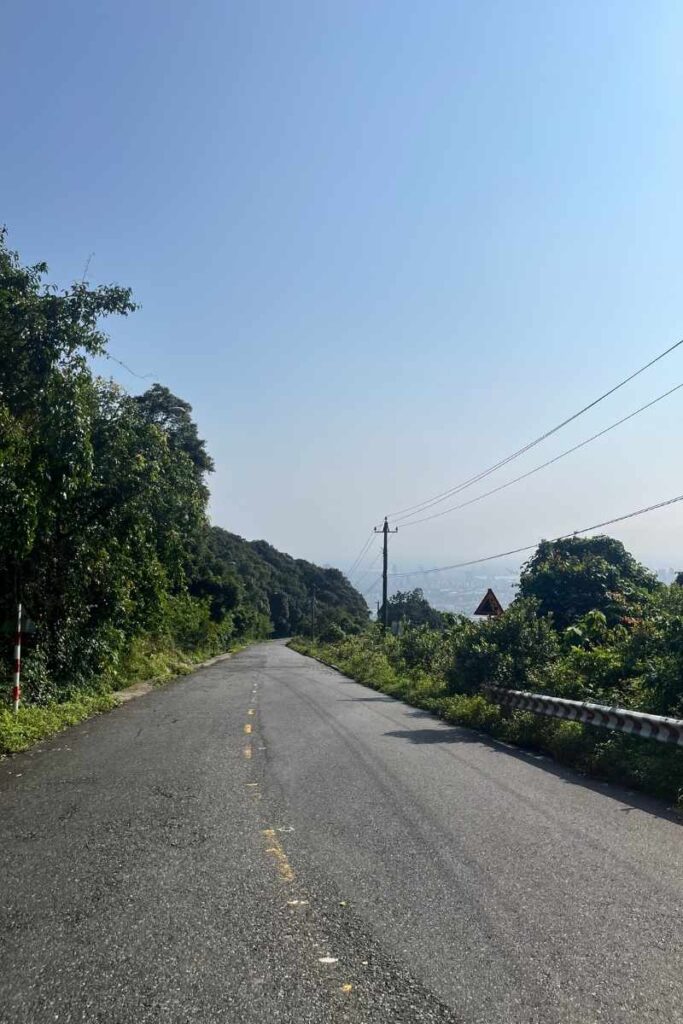
The main loop road (Hoàng Sa) runs between the lush jungle and the turquoise waters of the South China Sea (East Sea). It passes by Buddhist shrines, remote resorts, and viewpoints where you can gaze down upon the turquoise waters of Da Nang’s coastline. Keep your eyes peeled, and you may even see a troop of monkeys crossing the road or hanging out in nearby treetops.
The upper road (Monkey Pass) traverses the top of Monkey Mountain, passing by landmarks like Ban Co Peak (Đỉnh Bàn Cờ), Nhà Vọng cảnh, and Boom Boom Rock. But remember, to access this section of the road, you’ll need to be driving a manual motorbike. Since some sections of the road are quite steep, automatic motorcycles are not allowed.
While Monkey Mountain isn’t known for multi-day treks, it is a popular place for day hikes. The most famous hike is the trail to Ban Co Peak. However, it’s worth noting that much of this trail is actually the Monkey Pass Road rather than a deep jungle path. If you’d like to shorten the hike time, we recommend taking a Grab or riding a motorbike to Trạm Canh Gác bán đảo Sơn Trà (the security checkpoint) and walking from there.
5. See old military sites
Are you interested in the history of Vietnam in the 20th century? While those times were marred by war and tragedy, they illustrate the resilience and aptitude of the Vietnamese people, and being a history junky, visiting Monkey Mountain was at the top of my to-do list in Da Nang. Why?
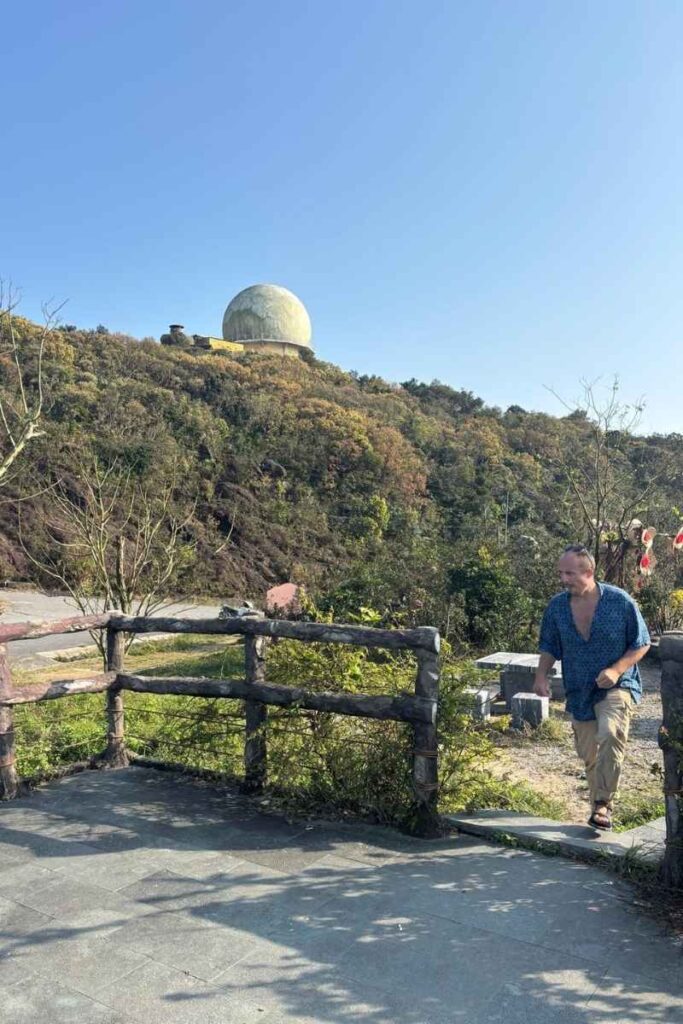
To see the Monkey Mountain Facility, which was a key American military installation during the Vietnam War (American War). Perched atop the south peak of Monkey Mountain, this complex of about a dozen buildings served as a communications hub where military personnel intercepted radio communications, controlled air traffic north of the DMZ, and operated radar systems around Da Nang.
After the Americans abandoned it in the early 1970s, the Monkey Mountain Facility largely fell into disrepair. However, you can still see the remnants of it today. Several buildings, including the dome-shaped radar station, are still standing. We even heard that the radar system was still operational. That may be why access to the facility is restricted, so most people, including us, are not allowed inside.
If you go up to the Monkey Mountain Facility, be sure to stay out of restricted areas. There are clear signs demarcating where you can and can’t go, so it’s easy to decipher where you should be.
How To Get To Monkey Mountain
Monkey Mountain is just minutes away from the bustling beach area of Da Nang.
To be more precise, the beginning of the Mountain Loop Road is approximately 5.2 kilometers (3.23 miles) from My Khe Beach. Meanwhile, Ban Co Peak is approximately 16.5 kilometers (10.25 miles) from My Khe Beach, via Monkey Pass Road. The checkpoint where automatic bikes cannot pass is about 10 kilometers (6.2 miles) into this journey.
So, how can you get there?
- Ride a motorbike/scooter: Riding a motorbike or scooter allows you the most freedom to explore Monkey Mountain. While the roads are somewhat steep and winding, traffic is generally low. Remember, if you want to ride up to the peak, you need a manual (not an automatic). If you’re interested in renting a motorbike, we recommend Quang Nga Motorbikes Rental.
- Use a ride-hailing app – It’s relatively easy to take a Grab, Xanh Me, or Be (Vietnamese ride-hailing apps) to Monkey Mountain. A one-way car trip should cost around 150,000 – 200,000 VND ($ 6.00), while a motorbike may cost about 50,000-70,000 VND ($ 2.00-$3.00). If you do want to go to the peak, it may be best to take a car, as not all drivers will have a manual motorbike.
- Hire a private driver – Private drivers are available to take you from Da Nang or Hoi An to Monkey Mountain. A day trip with a private car may cost anywhere from 500,000 VND to 1,500,000 VND ($20-$60) total, depending on the type of car and the number of people in your group. We’ve never taken a private car in Da Nang, but we heard Phong Nha Travels offers a good service with door-to-door service and an English-speaking driver.
- Take a guided tour – A guided tour can bring you to landmarks on Monkey Mountain, such as Ban Co Peak, as well as nearby sites like Linh Ung Bai But Pagoda, where you’ll find the famed Lady Statue. If you want to see red-shanked douc langurs, we recommend booking the Sunset Safari tour. If you want a fun guided scooter tour that shows you the whole area, we recommend booking the Scooter Adventure on Monkey Mountain.
Of course, we just drove our motorbike up to Monkey Mountain. However, since our bike is an automatic, we had to walk through the security checkpoint on Monkey Pass Road. From that point, the walk to the peak took us about an hour and a half. However, we were moving at a leisurely pace, and it could likely be done faster. Either way, the road is steep, so you’ll get a workout.
If you do drive to Monkey Mountain, take the coastal road (Võ Nguyên Giáp Street) north out of town. Eventually, you’ll come to Son Tra Beach, where you’ll see dozens of fishing boats anchored just offshore. At this point, you can continue along the coastal road (it curves to the right) to get to the Mountain Loop Road, or you can turn left onto Lê Đức Thọ Street, which will take you toward the Monkey Pass Road, the Monkey Mountain Complex, and Ban Co Peak.

When To Visit Monkey Mountain
The best time to visit Monkey Mountain Da Nang is during the dry season, which typically runs from December to April. That’s when the skies are clearest, the temperatures are most moderate, and the roads, as well as the trails, are in the best condition.
During the rainy season, which runs from May to November, rain is frequent, usually coming in the late afternoon or early evening. In many cases, large storms can arrive unexpectedly off the ocean, making roads and walking paths slick. Plus, cloudy conditions often obstruct the views.
You may also want to consider visiting Monkey Mountain earlier in the day, around 7:00 to 9:00 a.m. This is when the wildlife is most active and the temperatures are cool. That said, late afternoon and early evening are also a great time to saunter up Monkey Mountain.
We visited on a sunny day in February. We arrived at the mountain around 2:00 p.m. and made our way to the peak. Then, we descended around 6:00 p.m. We didn’t see much wildlife on the way up. However, on the way down, we saw lots of monkeys, including one red-shanked douc langur, although it was pretty far away.

Final Words On Monkey Mountain Da Nang
Monkey Mountain makes for an excellent day trip from Da Nang. If you’re looking to escape the city and experience nature, culture, and history, it’s worth checking out.
Be sure to pack your swimsuit, bring along a little sun protection and water, and keep your eyes open because you may just see some of the most colorful and rare monkeys on the planet.
It’s time to get out there and enjoy the magic of Monkey Mountain Da Nang!


Leave a Reply