

We visited Can Tho after visiting Cai Be, and I honestly had pretty low expectations. I had already fallen in love with the Mekong, but I thought Can Tho would be too busy a city to enjoy the Mekong River.
However, I was wrong. It is one of the largest cities in Vietnam, but it doesn’t feel as chaotic as Ho Chi Minh City or Hanoi. And there’s so much to do. It’s easy to spend a few days in Can Tho without getting bored.
We spent two nights and three days in Can Tho and thought it was the perfect amount of time. If you have a little time to explore the region from Can Tho, I’ve prepared a list of all the best things to do in Can Tho, including visiting the famous floating markets and some other hidden gems.
Note: This guide is only on the best things to do in Can Tho and the most popular Can Tho attractions. If you want more practical information, like how to get there and where to stay, read our article, Can Tho Travel Guide From HCMC (how to get there and what to do).

1. Mekong River Tours
The biggest thing everyone should do when visiting Can Tho is to join one of the river cruises on the Mekong. These leave from the main pier, Ninh Kieu Wharf, every day. There are usually two departure times: one at 5:00 am and another at 8:00 am. I strongly recommend leaving before sunset when the floating market is more active.
The standard tour is a two-hour tour that includes the Cai Rang floating market, fruit garden, rice factory, and a canoe ride down a small canal. However, we spoke to the tour operator and booked a five-hour tour. It visited all the same spots, but we were able to move a lot slower and take our time at each place.
I highly recommend doing a longer tour. The two-hour tours are perfect if you’re just visiting for a day or something, but if you have the time, do longer.
Where to book your Mekong river tour
Google Maps Location: Near Night Market on Can Tho Wharf
The best place to book a Mekong River tour is at the main pier in downtown Can Tho. A few little tour stands are set up where the boats leave, with people selling tickets from 5:00 am to 5:00 pm. They speak a little English and can help you create a customized tour if you’d like.
You can likely also book a tour through your accommodation if you’re staying at a hostel or hotel, but it was more expensive through our homestay than booking right at the pier.
If you do it this way, you’ll be in charge of getting to the pier on your own, so it’s best if you stay near the dock so you can just walk there in the morning.
2. Cai Rang Floating Market Can Tho
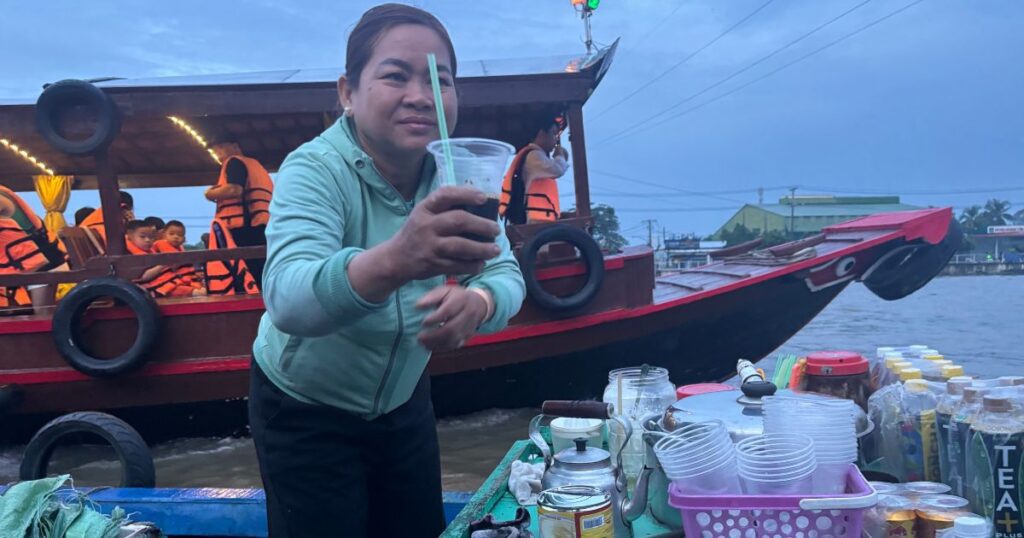
The Cai Rang Floating Market is the most popular floating market in Can Tho and is a must-see in the Mekong. It’s about a 20-30-minute boat ride from downtown Can Tho. Most people visit it on a boat tour from Can Tho, but you can hire a boat tour on the shore near the market if you don’t want to do a full morning boat tour.
If you visit alone, drive a motorbike, or take a taxi/Grab, approximately 3.5 miles (6 km) south of Can Tho. Once you get close, there will be tons of people trying to get you to hire a boat to take you out to the floating market. When we drove to the Phong Dien floating market, we passed by this area, and people were driving their motorbikes right next to ours, trying to sell us tours, so there was no shortage.
What the Cai Rang Floating Market is like
Google Maps Location: On Can Tho River, only reachable by boat
The market itself is very unique. It began in the early 20th century when many people got around the Mekong by boat. It was first located at the crossroads of four rivers: Can Tho, Dau Sau, Cai Son, and Cai Rang. It was later moved because there was too much traffic in the area.
Nowadays, people are much less dependent on boat transportation, and the market doesn’t seem as relevant. In fact, there were only a handful of sellers out when we went, and they didn’t seem super active. It’s clear the market largely just serves tourists at this point. However, it’s still a near glimpse into this region’s past.
There are large boats, and people live on them, selling various fruits and vegetables. Someone also goes around with coffee and coconuts and a few floating restaurants.

3. Phong Dien Floating Market
Visiting the Phong Dien Floating Market was one of the best things I could do in Can Tho because it fit into what I envisioned as a floating market. Instead of large houseboats like at Cai Rang, it was small canoes piled high with fruits, vegetables, and snacks.
Unfortunately, the only problem was that the Phong Dien floating market also felt like it was dying. There were only about 10 boats out when we went, and they didn’t look like they were selling amongst themselves or anything. They were just kind of floating together near the bridge and hanging out.
We drove motorbikes there (so we didn’t visit by boat), and one of the sellers paddled up to the shore for us, and we bought coffee and homemade banana chips. After watching the floating market from the beach and the bridge, we just explored the town a little bit and moved on.
Overall, it’s worth visiting, mainly because I think the Can Tho floating markets are on their last legs; who knows how long they will be around, and I love the history they illustrate.
How to get to Phong Dien Floating Market
Google Maps Location: In Phong Dien, can watch from the bridge if you don’t get a boat tour
Phong Dien Floating Market is much further up the river from Can Tho than Cai Rang. Most boat tours only go to Cai Rang, so you’ll have to specifically ask to go to Phong Dien or book a tour that includes it on its itinerary. However, it’s very easy to go by boat (it just takes longer, maybe about 40 minutes by boat each way). You just need to ask when you book your tour (and be prepared to pay a little extra for a longer tour).
We went to Phong Dien Floating Market by motorbike, though. It’s about 12.5 miles (20 km) southwest of Can Tho and takes 30-40 minutes to drive. The floating market is situated near a bridge in Phong Dien town, so you can watch the happenings from the bridge or walk down to the riverbank (boats will come to you if you’re interested in something).
As with Cai Rang, make sure you leave early in the morning. We left our homestay at around 5:00 am and got there before 6:00 am, and I think that was perfect timing because it seemed to start to resolve after about 1-2 hours.

4. Muoi Cuong Cocoa Farm
Someone who worked at our homestay recommended the Muoi Cuong Cocoa Farm, which is a small, family-run cocoa farm about 20 minutes from downtown Can Tho. It ended up being one of my favorite things to do in Can Tho.
You can visit the farm, get a short tour to learn how they make chocolate and chocolate products (the old-school way), walk through botanical gardens, sample some delicious homemade products, and buy some to take home.
Where is Muoi Cuong Cocoa Farm
Google Maps Location: About 20-minutes by motorbike from Can Tho
The cocoa farm is about 20 minutes southwest of Can Tho, in the same direction as Phong Dien Floating Market and Trúc Lâm Phương Nam Zen Monastery (which we’ll talk about later), so it’s easy to visit all three of those places in the same day if you’re driving.
The easiest way to visit the cocoa farm is by renting a motorbike and driving yourself, taking a taxi/Grab, or booking a tour through your accommodation.

5. Can Tho Night Market
Google Maps Location: Right on the wharf in downtown Can Tho
The Can Tho Night Market is another must-see attraction in Can Tho, though it isn’t that impressive. It’s just one block on a walking street, and little stalls are set up on both sides of the road and in the middle of the road. It mostly sells clothes and toys, but there are not many interesting souvenirs or handicrafts.
However, it’s located right across the street from the pier, so it’s worth walking through while in the area.

6. Can Tho Museum
Google Maps Location: Only about a 10-minute walk from the Night Market
The Can Tho Museum surprised me; it was way more interesting than I imagined. It’s only about a 10-minute walk from the pier. It’s a two-story museum with exhibits going through the city’s history.
There are many real photographs from the Vietnam War that show protests and how the region united during challenging times.
I saw a lot of pictures I’d never seen before, including a group of kids turning bee hives into bombs to fight off their enemy and another of an all-female brigade from Can Tho (among many others).
Overall, it’s one of the best activities in Can Tho because it’s important to learn a bit about the area you’re traveling when you’re traveling; it provides more perspective and understanding.
7. Pitu Khosa Rangsey Pagoda
Google Maps Location: You’ll need to walk through some small alleyways to get there
Vietnam is not a religious country, but this region has a lot of Khmer and Buddhist influences. Because of that, the area has some interesting Buddhist temples, pagodas, and monasteries. Pitu Khosa Rangsey Pagoda was one we stumbled upon by accident and ended up loving.
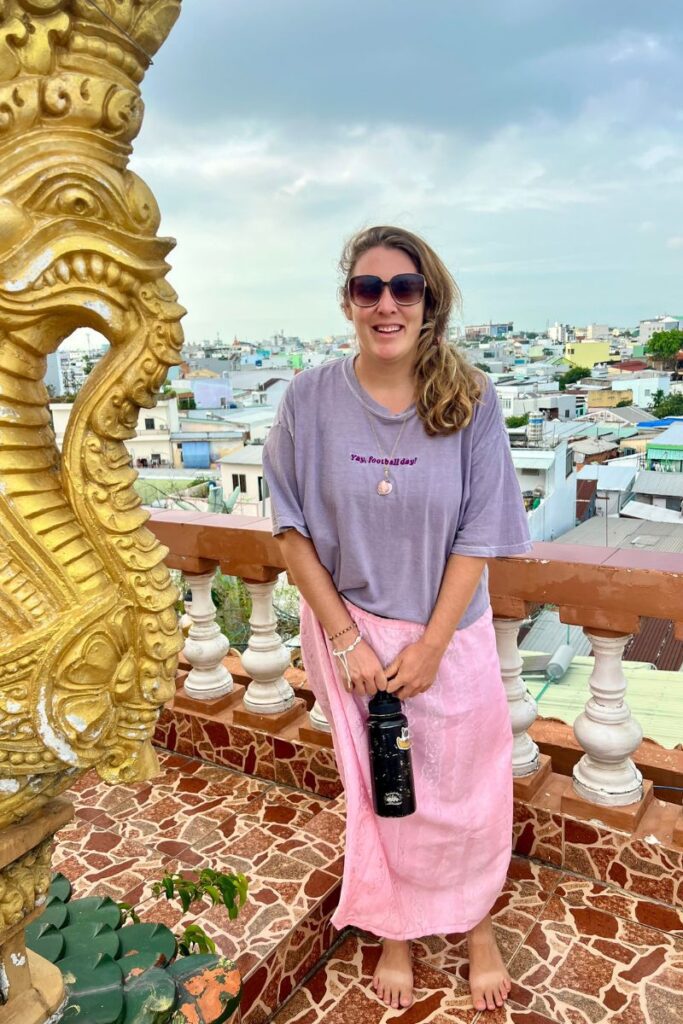
It’s hidden away in a little local alleyway, but you can’t miss it once you get in the area. It’s large and colorful, with an outdoor staircase built around a tree. The three-story pagoda is open to the public, with intricate designs, beautiful worship areas, and incredible views of the city.
Make sure you go all the way to the top (the final staircase is kind of hidden in a corner). Once you get to the top, go into the little “hidden” room that’s a little temple for books (one of the most unique rooms I’ve ever been in).
Always dress modestly in temples
As with any religious site, you should dress modestly and respectfully. This means covering your shoulders, chest, and knees. The Pitu Khosa Rangsey Pagoda had covering (sarongs and wraps) in the front for tourists to borrow when visiting the temple. Still, it was the only temple/pagoda in Can Tho that had those, so if you’re planning to visit others, bring some sort of cover-up if you’re wearing a tank top or shorts.
8. Thien Quang Buddhist Temple
Google Maps Location: Only about a 30-minute walk from the last temple on this list
After we visited Pitu Khosa Rangsey Pagoda, we met a nice couple from the Netherlands who recommended Thien Quang Buddhist Temple, so we decided to walk over there. It takes about 20-30 minutes to walk there from Pitu Khosa Rangsey Pagoda, most of which is a lovely stroll along a local riverwalk.
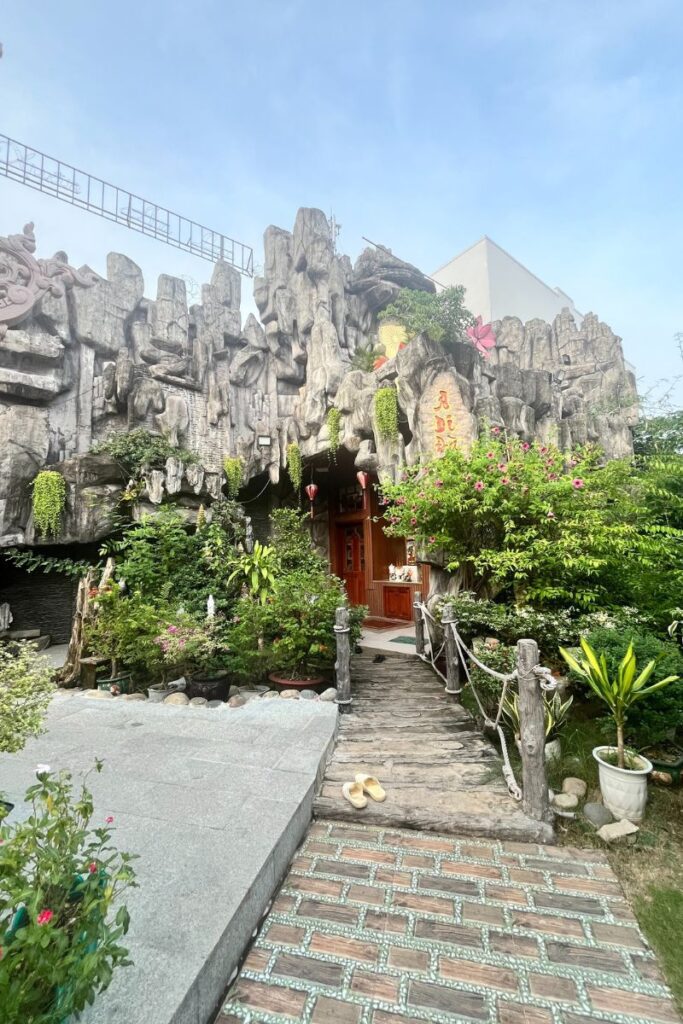
Thien Quang Buddhist Temple is another beautiful art, history, and religion piece. This temple has several layers, some tucked away in the back. The main temple is front and center, but off to the side, there are several other detached places of worship with different scenes of the Buddha (birth, renunciation, enlightenment at the Bodhi tree, nirvana, and a white elephant).
This Buddhist temple seemed geared mainly toward women; there were mostly only women coming to pray there. We didn’t ask anyone why and couldn’t find much information because we went around sunset, and everyone seemed very busy with their prayers. Regardless, it is worth a visit.
9. Trúc Lâm Phương Nam Zen Monastery
Google Maps Location: A bit further out of the city, about 30-45 minutes by motorbike
Trúc Lâm Phương Nam Zen Monastery is one of the best Can Tho attractions, even though it’s a bit further away. The monastery is about a 30-45 minute drive from Can Tho (not too far from the Phong Dien Floating Market and Muoi Cuong Cocoa Farm).
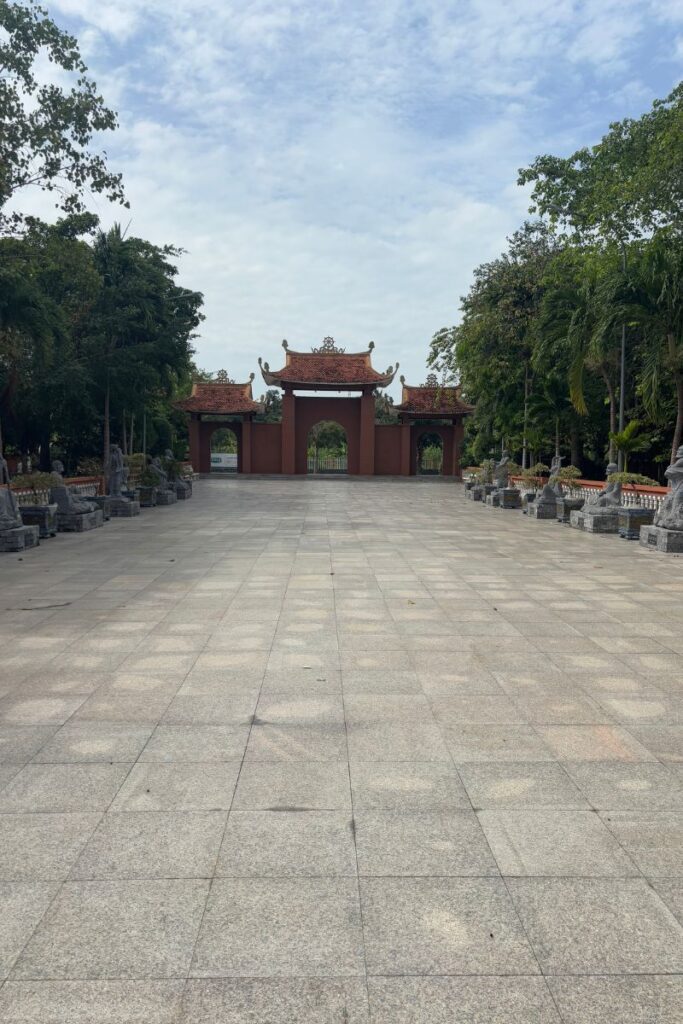
Construction was finished in 2015, and it covers an area of 38,000 square meters and is the largest Buddhist monastery in southwest Vietnam. It has several temples, places of worship, and even two parks with koi ponds, benches, and little pagodas.
Perhaps one of my favorite things about the monastery was a little walkway with a row of different Buddha poses on either side. There were, all in all, over 20 different Buddha depictions and moods.

10. Walk Along Ninh Kieu Wharf
Google Maps Location: I also recommend staying around this area
The Ninh Kieu Wharf is a walking street from the Can Tho Bridge to the Can Tho old market. It stretches approximately 0.5 miles (~1 km) and has little parks, benches, and statues. You can also book a boat tour of the Mekong River, and the Can Tho Night Market is right across the street.
Walking the entire wharf only takes about 20 minutes, but it’s a really fun area. And right across the street is all the popular touristy restaurants/shops, so it’s a good place to be.
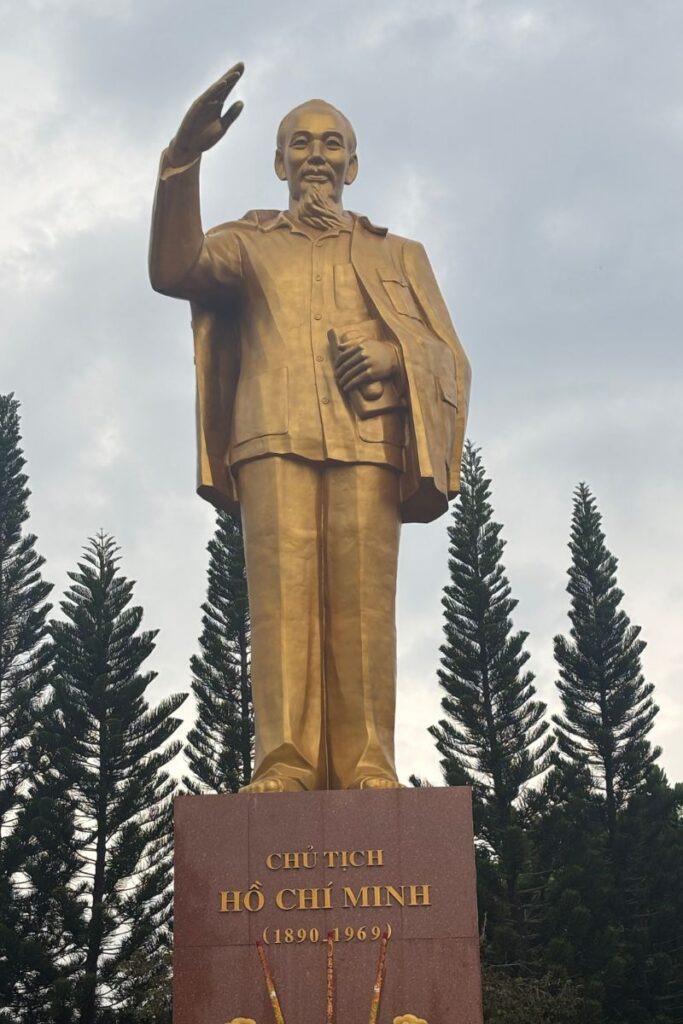
11. Take a Photo at the Ho Chi Minh Monument
Google Maps Location: Right on the wharf, near the boats
If you’re walking along the wharf, you must stop at the famous Ho Chi Minh Monument for a quick picture. Ho Chi Minh is an important figure in the South, and there are tons of statues of him all around. The Ho Chi Minh Monument in Can Tho is large and can be seen anywhere along the wharf. It’s a pretty piece of architecture, and the little courtyard around the statue always seemed lively and energetic.

12. Walk on the Can Tho Walking Bridge at Night
Google Maps Location: Sometimes called the Can Tho Love Bridge
The Can Tho Walking Bridge is at the end of Ninh Kieu Wharf and can’t be missed. It’s a short bridge that crosses the Can Tho and is decked out with tons of lights and decorations, with two large lotus flowers with thousands of lights.
The bridge is very short; you can walk across the whole thing in about five minutes. But there are benches throughout and lots of good photo spots. There’s nothing to see across the bridge, so you only need to visit to walk across and admire the lights.
Obviously, it’s best to visit when it’s dark because it’s a bridge with lights and designs that are a lot more fun at night.

13. Admire Can Tho Street Art
Can Tho isn’t world-renowned for street art, but some really good little gems are hidden on backroads around the city. I personally love street art, and we found some great spots.
Street art is a beautiful reflection of a city’s history, style, and culture. Most of the time, the art depicts scenes around the town, of important monuments, or critical historical times (though some of it is just fun, too).
Either way, try to keep an eye out for local artwork along the buildings and stop for a second to admire the local talent.
Where to find street art in Can Tho
Google Maps Location: This pin is around the area where my favorite street art is, near the museum
There’s street art all over the city, but one little alleyway near the Can Tho Museum was particularly interesting. The block on both sides of the street has different scenes from around the city, including local markets and other famous sites. I can’t tell how long it’s been there, but it looks a little weather-worn (which adds more personality), though it’s still a beautiful sight.
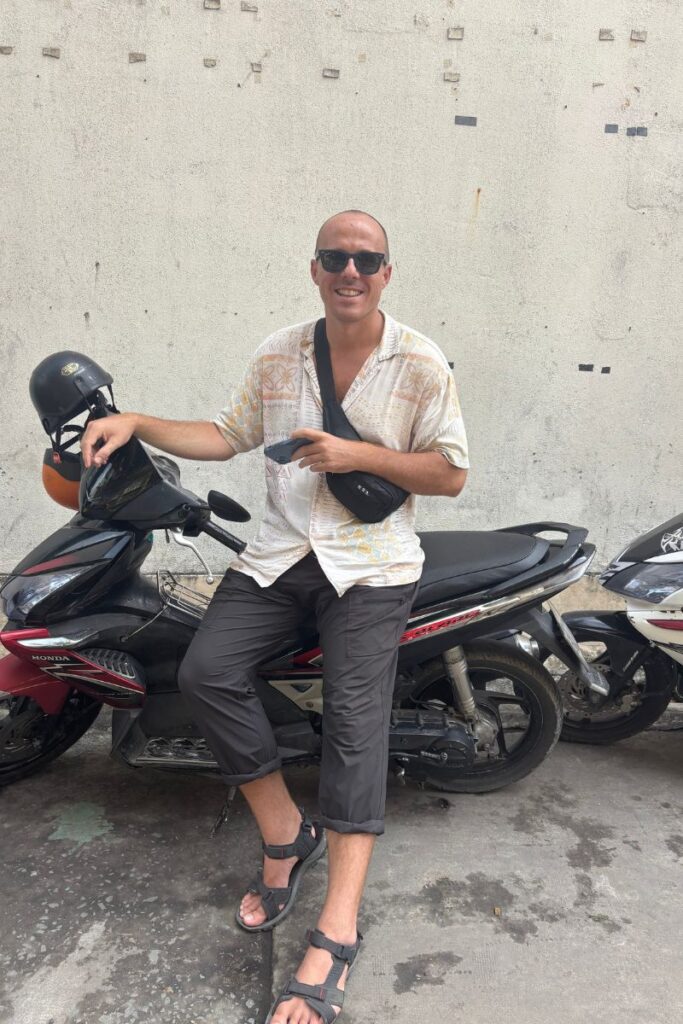
14. Rent a Scooter and Explore the Backroads
One of the most fun Can Tho activities was simply exploring the region on the back of a motorbike. We rented motorbikes from our homestay and drove to some popular attractions, like Phong Dien Floating Market and the cacao farm.
In between activities, we got lost in the backroads (literally, at one point, we were running out of gas, and in the middle of nowhere on a dirt road, we just barely made it out and to a gas station).
Can Tho is already a very authentic city, so you get a good taste of local life, but if you have your own bike and can venture outside the city center, you’ll see a lot more.
Is it safe to drive a motorbike in Can Tho?
Driving a motorbike in Vietnam is always a bit dangerous, to be honest. You need to do so at your own risk. Most people get around by motorbike, and there aren’t a lot of clear-cut road rules (and few police enforcing them), and traffic can get chaotic.
Technically, you also need a Vietnamese motorbike driver’s license to legally drive. You used to be able to get one on a tourist visa, but the rules recently changed, and they are a lot harder to get. An International Driver’s permit is not accepted in Vietnam, either (though some police might take it).
You also should double-check with your travel insurance before hopping on a bike because some travel insurance won’t cover motorbike accidents in Vietnam (I don’t think any will cover you if you don’t have a legal license, either).
That said, Can Tho is pretty easy to drive around (especially compared to HCMC), especially once you leave the city center. The roads are wide, there isn’t much traffic, and many main roads seem newly paved. The scenery is beautiful, too.
I don’t want to scare you away from riding a motorbike because, like I said, it was one of my favorite Can Tho activities, but it’s important to be aware of the risks.
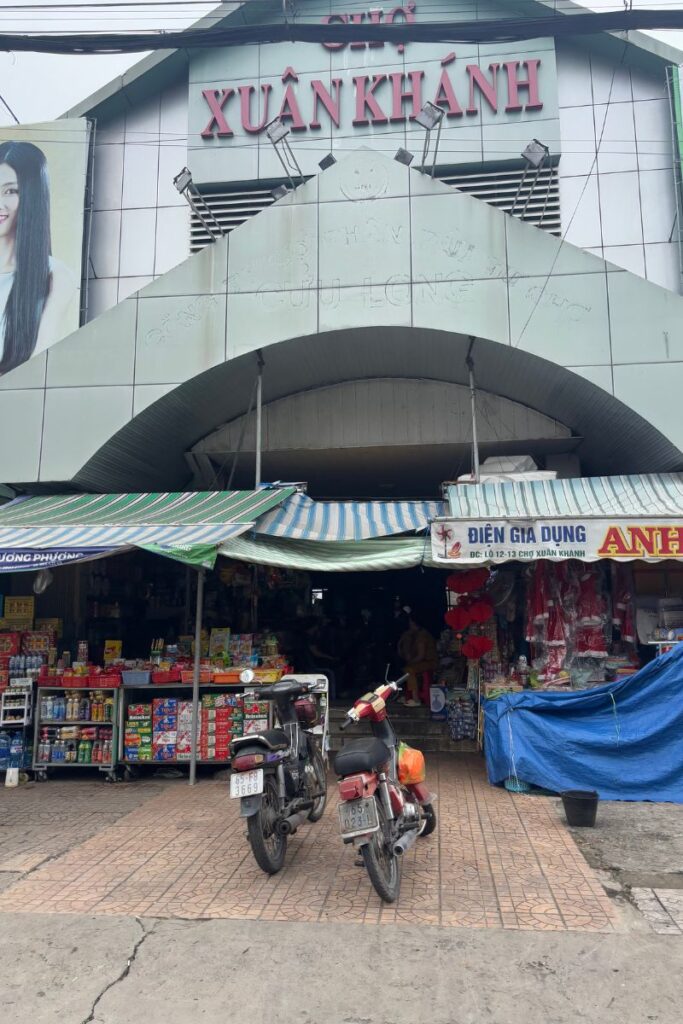
15. Shop at Local Markets
Finally, you should spend a little time exploring local markets (beyond the night market). I’m such a sucker for local markets in Vietnam. They are vibrant and chaotic, with fish swimming around in small plastic bins on the floor, mounds of vegetables strewn out on little tarps, raw meat hanging from a hook, spices and fruit galore, and so much more.
Can Tho also has some great markets. One of the easiest ones to get to is just past Ninh Kieu Wharf (on the opposite end of the walking bridge). Just keep walking down the street. You’ll see a large covered market right on the river.
You can even walk past it, down the street where things get less busy, and find lots of fruits, vegetables, and local street food right on the side of the street. It’s a really interesting area.

What I Loved About Visiting Can Tho, Vietnam
We visited Can Tho with some family and friends after visiting Cai Be. I had heard it was a good starting point for the Mekong, but I had pretty low expectations. When it comes to living, I love the city, but when it comes to weekend trips, I much prefer nature (like Cat Tien National Park or Monkey Island), so I didn’t think I’d like Can Tho that much.
However, Can Tho far exceeded my expectations and was a lot of fun. Because it’s a bigger city, there are many more things to do. I highly recommend spending at least one or two nights here. You can always spend another short weekend in one of the more rural villages on the Mekong to experience both sides.




Leave a Reply