

When traveling to Vietnam, one of the best ways to learn about the country’s history and culture is to explore some of the museums in Ho Chi Minh City. There are good museums around the country and some really good ones in the city.
We’ve spent over a year in Ho Chi Minh City and have visited all the best museums in HCMC. There are several centered around the Vietnam War, ones that are heartwrenching but necessary to understand how Vietnam has rebuilt and grown over the years. There are other museums about the city’s growth, the incredible throughout the years, and even a museum dedicated to the Ao Dai (the traditional clothes in Vietnam; you’ll see them a lot around Tet in HCMC).
In this article, I’ll share the 9 best museums in Ho Chi Minh City, ranked by location, convenience, and overall quality of the museum.
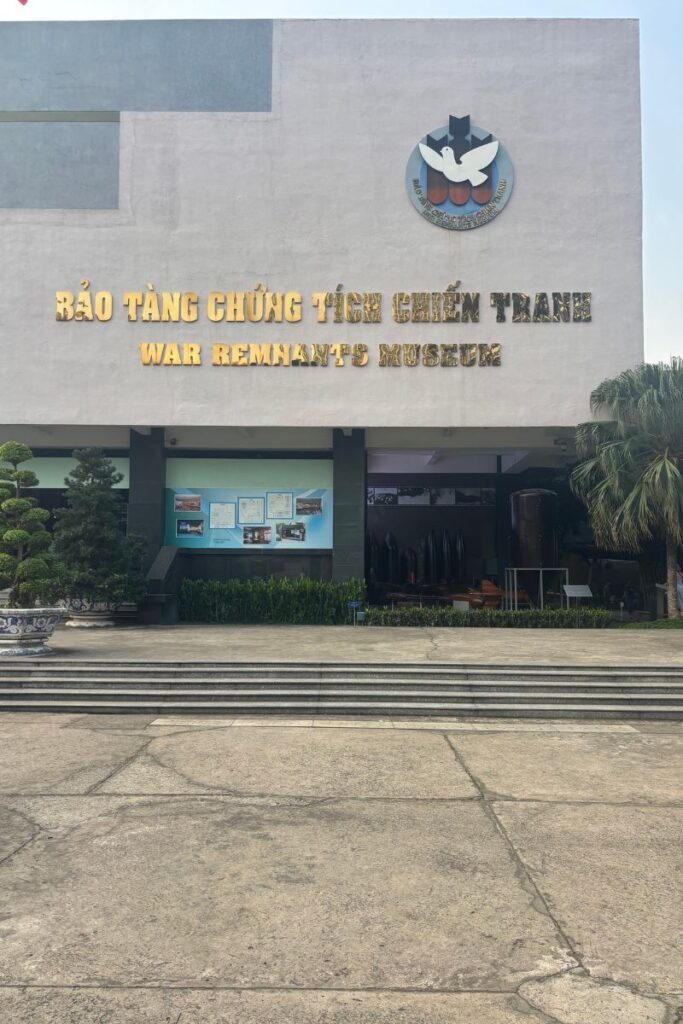
War Remnants Museum
Location: 28 Vo Van Tan, District 3 (Google Maps Location Here)
The War Remnants Museum is perhaps the most famous and the best museum in Ho Chi Minh City because of its historical importance. As the name suggests, the multi-story museum is a tribute to the Vietnam War and the lasting negative effects left behind by the war.
Visiting the War Remnants Museum is a bit of a shocking experience for those who aren’t too familiar with what went on, but a necessary one. It details prison conditions, fighting conditions, and the use of Agent Orange. It’s not hiding or sugarcoating anything.
The museum is three stories, with several outdoor exhibits and a gift shop on the first floor. It’s located in District 3, right next to District 1 (in the city center), and within walking distance from many of the main things to do in Ho Chi Minh City.
You want to set aside at least 2 hours for the War Remnants Museum. It’s a large museum with tons of different exhibits, real-life photographs, and plaques with more information in English. You can purchase an audioguide for the museum to walk you through everything.
Independence Palace (Reunification Convention Hall)
Location: 106 Nguyen Du St, District 1 (Google Maps Location Here)
The Independence Palace, also known as the Reunification Palace, is a powerful symbol of Vietnam’s journey to independence and unification. Located in the heart of District 1, this striking piece of 1960s architecture, with its famous fountain, tells the story of Vietnam’s political transformation and the final days of the Vietnam War.
The palace has been designed as a time capsule of sorts, with its rooms preserved precisely as they were on April 30, 1975, when a North Vietnamese tank crashed through its gates, marking the fall of Saigon. You can walk the halls and look at the rooms as they were, including the president’s private quarters, the dining hall, and even the underground bunker complex.
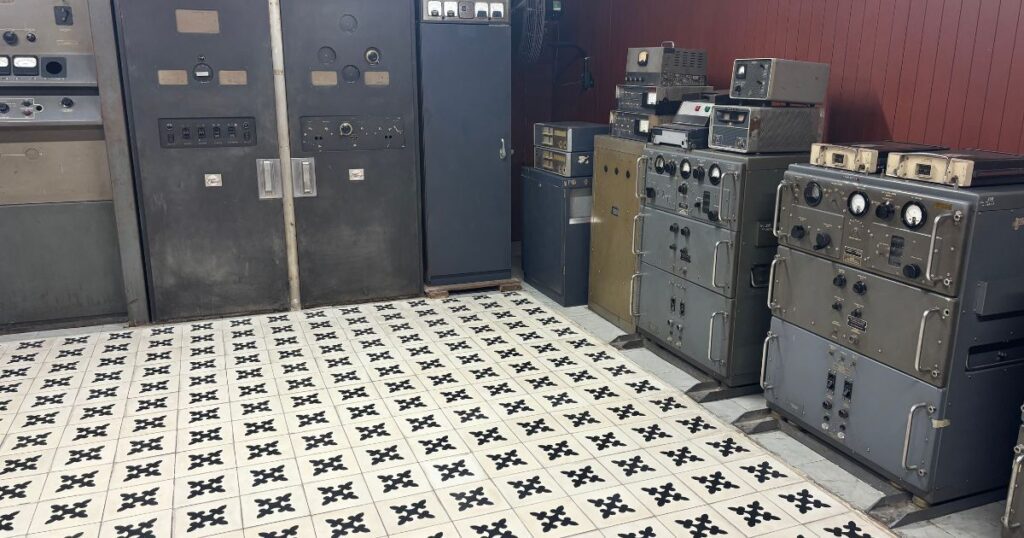
The palace is five floors above ground and has two basement levels, showcasing an interesting blend of traditional Vietnamese and modernist design. One of my favorite parts of the palace is the basement floors, which have a network of tunnels, a telecommunications center, and war rooms frozen in time.
You should plan to spend about 1.5 hours exploring the palace. Most rooms have detailed information panels in English, and guided tours are available throughout the day. The sprawling grounds surrounding the palace are equally impressive, featuring manicured gardens, vintage military vehicles, and the famous tank 843 that breached the gates.
Museum of Ho Chi Minh City
Location: 65 Ly Tu Trong, District 1 (Google Maps Location Here)
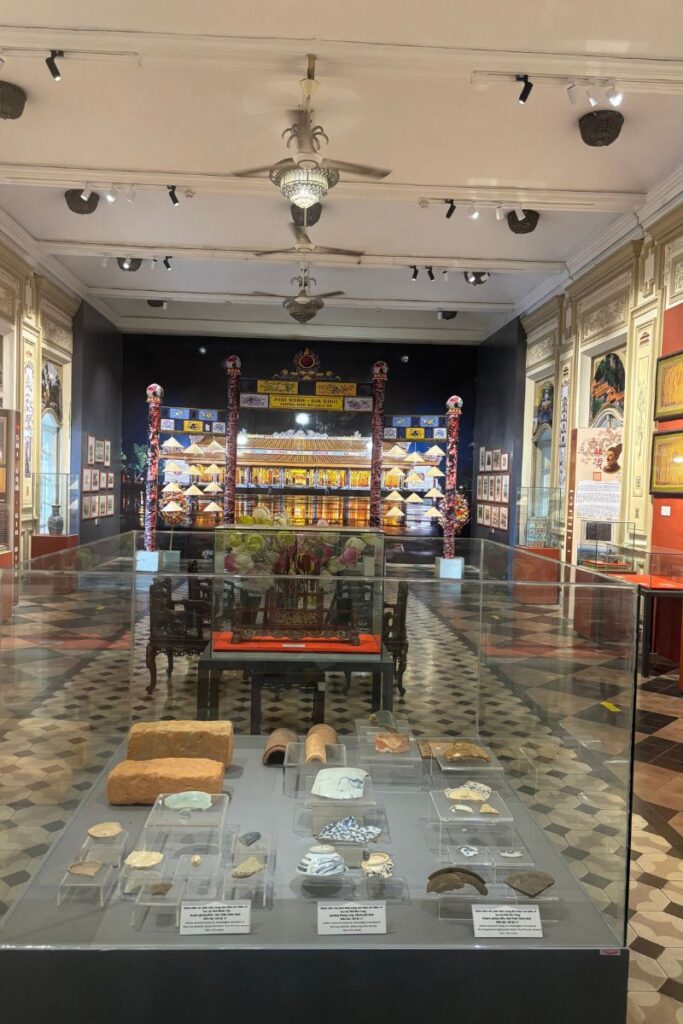
The Museum of Ho Chi Minh City is one of the most underrated museums in the city. It seems most tourists, travelers, and even some expats haven’t heard of it. Understandably, it’s often overlooked for the more famous War Remnants Museum. However, it’s an interesting museum, especially for architects and those interested in the speedy development and growth of the city.
The museum’s detailed city planning models and maps helped me understand Ho Chi Minh City’s development differently. Despite living in Saigon for over a year, including time in Thu Duc, I was surprised to learn new details about the Thu Duc City project. Seeing how Districts 2, 9, and Thu Duc are being combined into a creative and technological hub was a cool discovery.
There’s also a currency collection that takes you through Vietnam’s monetary history. You can see everything from ancient trade coins to French colonial currency. Each piece of currency tells its own story about what happened in Vietnam.
The museum is housed in a beautiful colonial-era building on Ly Tu Trong Street, just a short walk from other major attractions like the Notre Dame Cathedral and Central Post Office. A large staircase winds its way up through the building, adding to its colonial charm (and serving as an excellent spot for photographs).
It’s rarely crowded, which means you can take your time exploring the exhibits without feeling rushed. Plan for about an hour to see everything, though history buffs might want to stay longer to read all the information panels, which are thankfully in both Vietnamese and English.

Ho Chi Minh City Museum Of Fine Arts
Location: 97 Pho Duc Chinh St, District 1 (Google Maps Location Here)
Just a short walk from the Ho Chi Minh City Museum, there’s the Ho Chi Minh City Museum of Fine Arts. To be entirely honest, I’m usually not the biggest fan of art museums because I’m not the most artistic person, and sometimes city art museums start to blend when you’ve been to many of them, but the HCMC Museum of Fine Arts was something special.
First things first, the layout and architecture of the museum is stunning. It was built in 1929 as a French colonial mansion, and it’s honestly worth visiting just to see the building itself. The central staircase is a main point of interest (when I went, there were tons of photoshoots on the stairs at all levels), with beautiful stained-glass windows casting colorful beams across the marble steps.
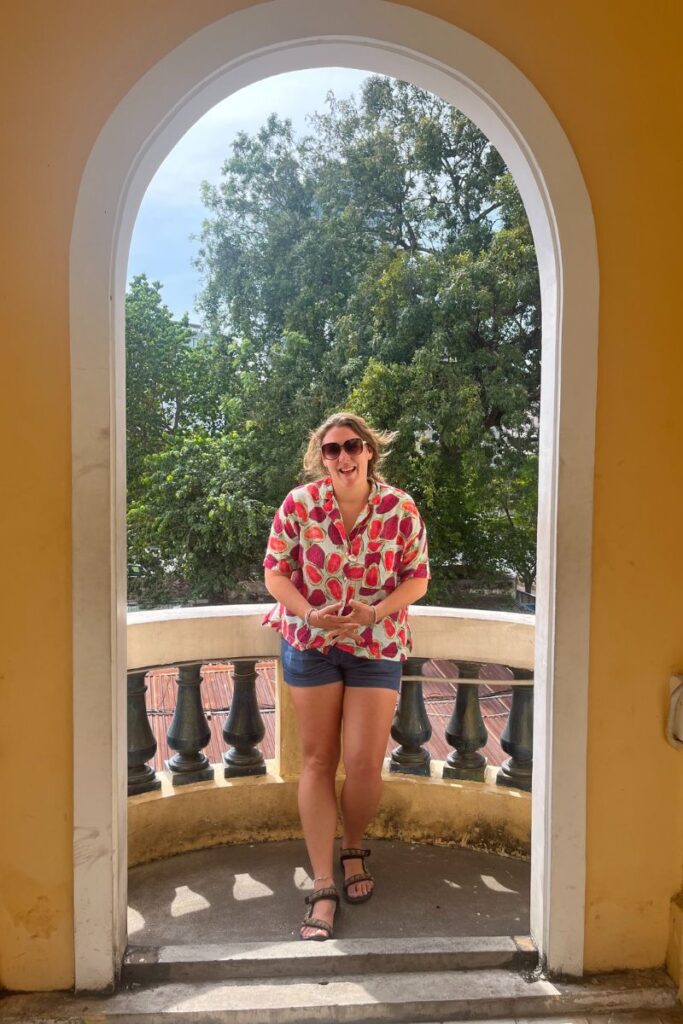
The hallways are designed with narrow window slots that let in natural light streams, creating this atmospheric feel as you walk from exhibit to exhibit. The building somehow manages to blend French colonial architecture with Asian design elements, and you can see this mix everywhere, from the floor tiles to the ceiling decorations.
There was also some incredible art, with a large emphasis on Vietnamese artwork throughout history. The collection spans from traditional silk paintings and lacquerware to modern contemporary pieces. What I found particularly interesting was how many artworks told stories about Vietnam’s past, including peaceful countryside scenes to powerful pieces about the war years. Even if you’re not usually an “art person,” seeing the mix of traditional and modern Vietnamese art in such a beautiful setting makes this museum well worth the visit.
The time you need for the museum varies, depending on whether you’re going for a photoshoot. But we spent about two hours walking through every exhibit at a pretty slow pace (with some photoshoots, too).

Museum of Traditional Vietnamese Medicine
Location: 41 Hoang Du Khuong St, District 10 (Google Maps Location Here)
The Museum of Traditional Vietnamese Medicine (FITO Museum) is one of the most underrated activities in Ho Chi Minh City. We only heard about it from our tour guide in Cai Be on a Mekong River tour. Otherwise, I’m not sure we would’ve ventured to District 10. However, it’s only about a 10-minute motorbike ride from the city center and worth the trip.
The museum experience begins with a short movie (in English), where you learn more about the plant varieties and the importance of herbal remedies throughout Vietnam and Southeast Asia. After watching the video, you take an elevator to the fifth floor and slowly work through the museum.

The museum has tons of fascinating exhibits, with so much more detail and care put in than I anticipated. One of my favorite exhibits was a wall lined with glass jars with every herbal plant used in traditional medicine. Each jar had a little name plate next to it explaining what it was used for. In another room, there were hand-drawn drawings of important plants and flowers for the traditional medicine.
There were also beautiful photo spots. I went there about a month before Tet, so certain corners of the museum were pretty busy with professional photographers and Vietnamese taking their Tet photos in traditional photographs. However, they were only centered around one or two floors, and the other floors of the museum were empty.
After you tour the museum, you return to the first floor, where someone’s waiting for you with a fresh cup of herbal tea. From start to finish, a lot of care goes into the experience, and it’s a unique concept. I recommend setting aside at least one hour for the museum, but you might want a little longer if you stop to examine the exhibits.
Ho Chi Minh Museum (Dragon Wharf)
Location: 01 Nguyen Tat Thanh St, District 4 (Google Maps Location Here)
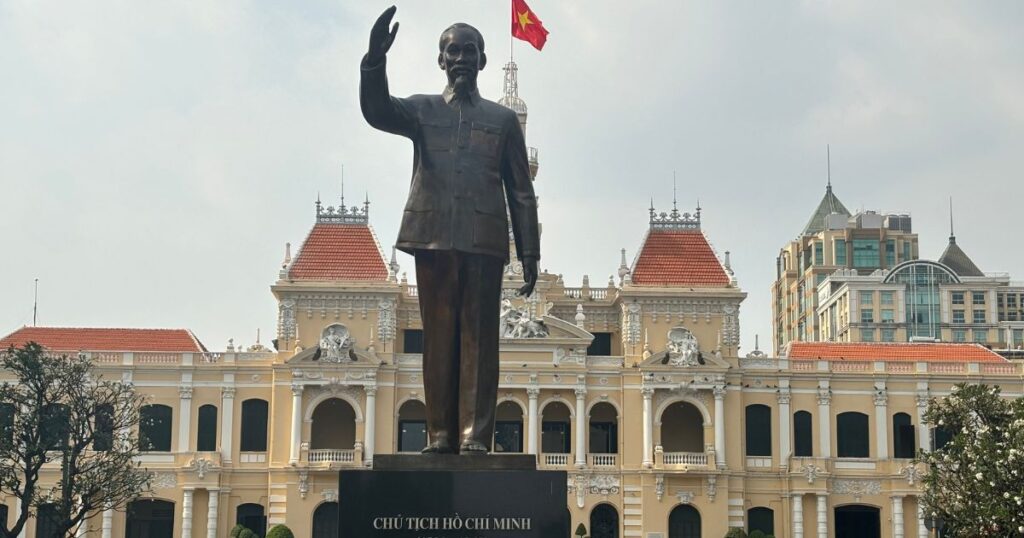
The Ho Chi Minh Museum is a must-visit spot to dig into the life and legacy of Vietnam’s most iconic leader, Ho Chi Minh himself. Tucked along the Saigon River in District 4, the museum is housed in a beautiful French colonial building that was once a shipping company headquarters.
The museum offers a detailed look at Ho Chi Minh’s life, from his early days as a revolutionary to his pivotal role in Vietnam’s fight for independence. The exhibits are arranged chronologically, and each section tells a story—from his travels abroad and political awakening to his leadership during the country’s struggle for freedom. The space is packed with photographs, letters, artifacts, and even some of his belongings, giving you a more intimate sense of the man behind the legend.
The building itself adds to the experience. Its grand, colonial-era design, with large archways and sweeping staircases, creates a great mix of history and architecture. Outside, the riverside location in District 4 is worth exploring and is less popular for tourists.
Plan to spend about an hour to an hour and a half here. Most of the information is in Vietnamese and English. It’s not as crowded as some of the other major attractions in the city, so you can take your time to appreciate the displays without feeling rushed.
Rung Sac (Monkey Island)
Location: Can Gio District, HCMC (Google Maps Location Here)
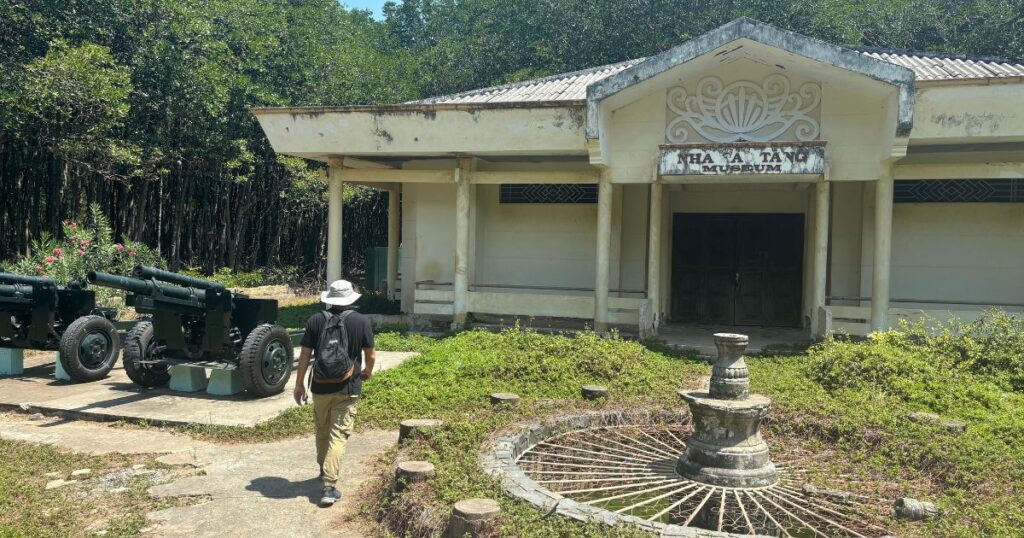
Rung Sac is an open-air museum at Monkey Island in Can Gio. Can Gio is one of the outer districts in Ho Chi Minh City, and it’s pretty hard to get to. You’ll have to take a ferry and endure a 1.5-hour drive. There aren’t any direct buses, so you’ll need to spend the night in Can Gio to give yourself more travel time, take a motorbike, hire a driver, or visit on a tour. Still, this is one of the best museums in Ho Chi Minh City.
Rung Sac was an important military base in the Can Gio Mangrove Forest during the Vietnam War. You’ll enter through Monkey Island, walk (or take a river boat) to the end, where the military base is recreated. They’ve done an amazing job with this area, which features wax figures depicting life during the Vietnam War, reconstructed huts, and little plaques explaining what things were like during the Vietnam War.

One of the most incredible things about the Rung Sac open-air museum is that it is located deep within Monkey Island. This is a conservation effort to protect the land and the animals within. You can walk down a path through the forest surrounded by hundreds of monkeys. So, you get a fun monkey-outing alongside a cool outdoor museum experience.
If you’re planning a trip to Rung Sac, it’s worth making a day of it. The combination of history and nature makes it one of the most unique spots in Ho Chi Minh City. Plus, the journey itself can feel like an adventure, with scenic views along the ferry ride and through the lush mangroves of Can Gio. Just be sure to pack bug spray—between the forest and the monkeys, you’ll want to keep those pesky mosquitos at bay.
TRAVELER NOTE: Rung Sac is entirely outside, so you might want to read our travel guide, Best Time To Visit Ho Chi Minh City (Month-by-Month Guide), so you can prepare for the weather and different seasons in the south.

Cu Chi Tunnels
Location: Cu Chi District, HCMC (Google Maps Location Here)
The Cu Chi Tunnels are one of Vietnam’s most famous historical sites and one of the best outdoor museums in Saigon. This underground network, located about 70 kilometers outside of Ho Chi Minh City, was a critical base for the Viet Cong during the Vietnam War. Visiting the tunnels is a hands-on way to learn about the war’s guerrilla tactics, and it’s an experience that sticks with you long after.
The tunnels span over 250 kilometers, and while much of it is closed off, some sections have been preserved and widened for visitors. You’ll have the chance to crawl through some of the tunnels yourself (if you’re feeling adventurous), which gives you a small taste of what it might have been like for the soldiers who lived and fought there.
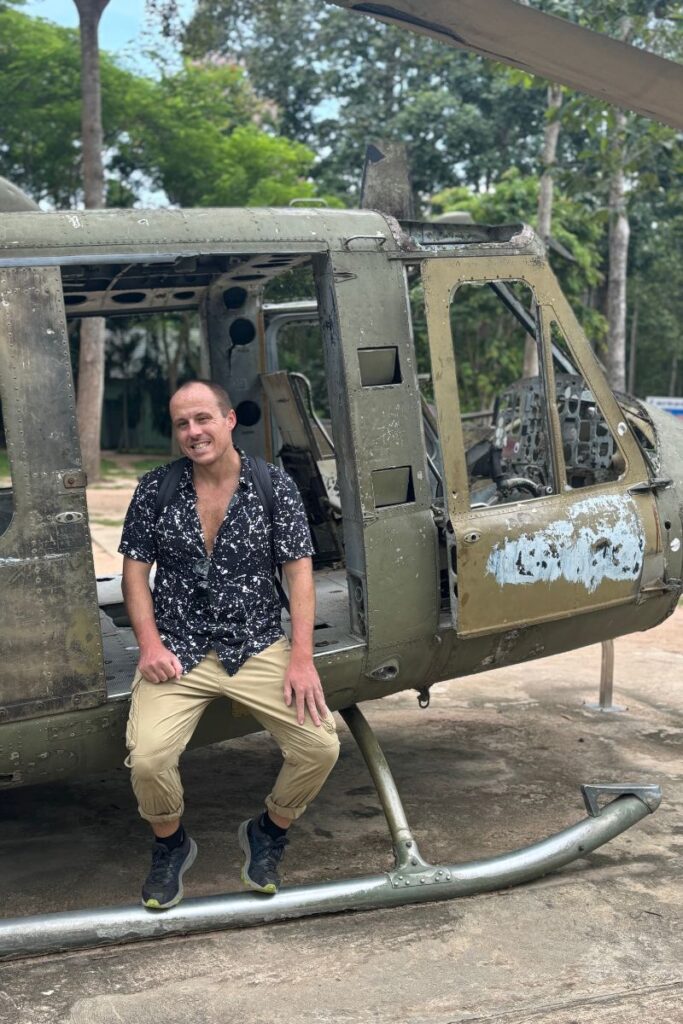
Above ground, the site has plenty to explore as well. You’ll see traps and tools used by the Viet Cong, recreated bunkers, and even tanks and bomb craters left behind. The area is surrounded by dense jungle, which gives the site an authentic atmosphere. It’s easy to imagine how this terrain provided the perfect camouflage for the Viet Cong. After your tour, you can try shooting a rifle at the firing range (though this is optional and not everyone’s cup of tea). There’s also an outdoor exhibit with real-life military equipment left behind (including helicopters, fighter jets, and tanks).
You’ll want to plan for around half a day, including travel time. Guided tours are highly recommended to help you understand the full context of what you’re seeing. We went alone, without a tour, and felt like we were missing out. There’s no one to tell you stories and historic events if you aren’t with a tour guide. We read online that you can get a guide with your ticket, but our guide showed us which tunnels we could crawl through and led us to the next. He didn’t share anything about the history.
The Cu Chi Tunnels aren’t your classic museum. It’s more of a hands-on, in-person experience. But that makes it all the better for absorbing the information and learning about life during such difficult times. I highly recommend it alongside other important pieces of the country’s history, like the War Remnants Museum.

Ao Dai Museum
Location: Long Phuoc, District 9 (Google Maps Location Here)
The Ao Dai Museum is one of Ho Chi Minh City’s hidden gems and one of my favorite museums in HCMC, and surprisingly, even many locals don’t know about it. Dedicated entirely to the Ao Dai (Vietnam’s traditional long dress) the museum showcases the history, cultural significance, and evolution of this iconic attire, which dates back to the 18th century.
Inside the museum, there’s a large exhibit room filled with displays of Ao Dai through the ages. Each piece tells a story, reflecting its time’s styles, materials, and influences. Some displays are accompanied by English descriptions, though not all exhibits have translations. Even so, the beauty of the clothing speaks for itself.
What makes the Ao Dai Museum stand out is the garden surrounding it. It’s a spacious, peaceful area with lotus ponds, small bridges over streams, and plenty of spots for photos, like bicycles decorated with flowers. If you visit around Tet (Vietnamese New Year), you’ll likely see locals in Ao Dai taking traditional photos—a common custom during the season. The museum even offers Ao Dai rentals if you want to take pictures yourself. When I went, the garden was busy with families and photographers enjoying the sunny day, which added to the lively atmosphere.
Getting to the museum is a bit of an adventure. It’s located in District 9, about 45-60 minutes from the city center by Grab. Alternatively, you can take the new Metro to National University or High Tech Park, then call a Grab from there. Just be prepared for a bit of a wait when heading back. Grab bikes or cars aren’t as readily available in this area, and I ended up waiting about 20 minutes for my ride.
If you’re looking for something unique and off the beaten path, the Ao Dai Museum is well worth the trip. It’s also kind of fun to explore outside the city center, too. Especially since getting around HCMC is pretty straightforward. But overall, Between the fascinating history and the tranquil garden setting, it’s an experience that combines culture, beauty, and a touch of adventure.

Thoughts On Making Time For HCMC Museums During Your Visit
When most people think of an exciting few days in Ho Chi Minh City, they usually don’t account for several days’ worth of museums. However, I’d argue the Ho Chi Minh City museums display some of the best parts of the city.
Not only do these HCMC museums allow a glimpse into the city and country’s turbulent history, but they are all so well-organized, and some even have beautiful architecture. You could honestly spend days hopping around to all these museums, and I promise, you’ll learn something new at each one of them.
I personally loved the Ao Dai Museum because it’s so different, there are virtually no tourists so it feels like a real glimpse into Vietnamese traditions, and it’s a really beautiful space. However, the War Remnants Museum, Cu Chi Tunnels, and other pieces of the city that reflect on the Vietnam War are also an important part of history.
Have you traveled to Ho Chi Minh City? And if so, which museums did you go to? If not, which of these museums in Ho Chi Minh City are you most interested in? We’d love to hear your thoughts below!



Leave a Reply